

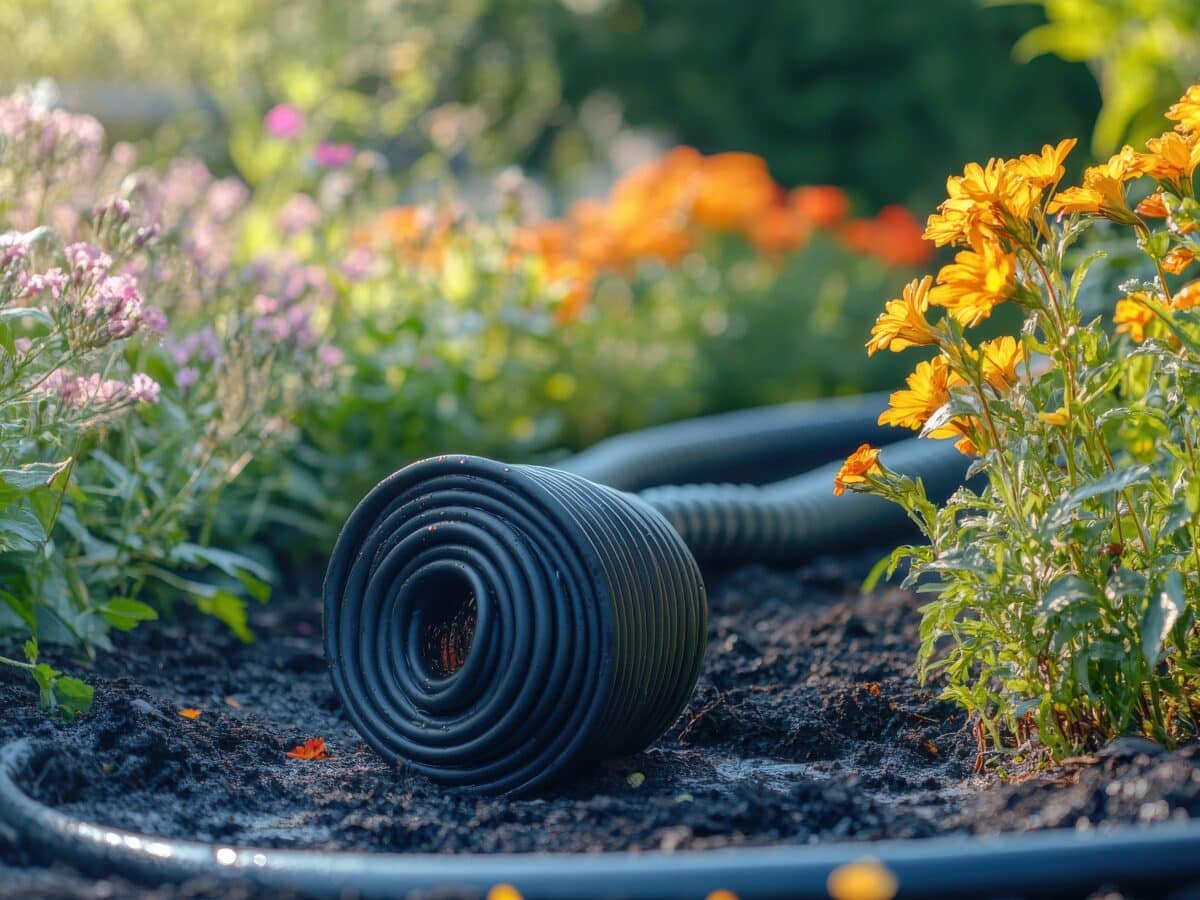
A soaker hose is a garden hose that leaks on purpose. Instead of carrying water to a nozzle at the end, it weeps moisture along its entire length through thousands of tiny pores, straight into the soil at the roots. No timer required, no fittings to plan out, just a hose you lay down and turn on.
It’s the simplest form of low-volume irrigation there is, which is exactly why it’s still around after decades of fancier alternatives. This guide covers how it works, when it beats a full drip system, how to lay one out, and where to find the details for your specific plants.
How a soaker hose works
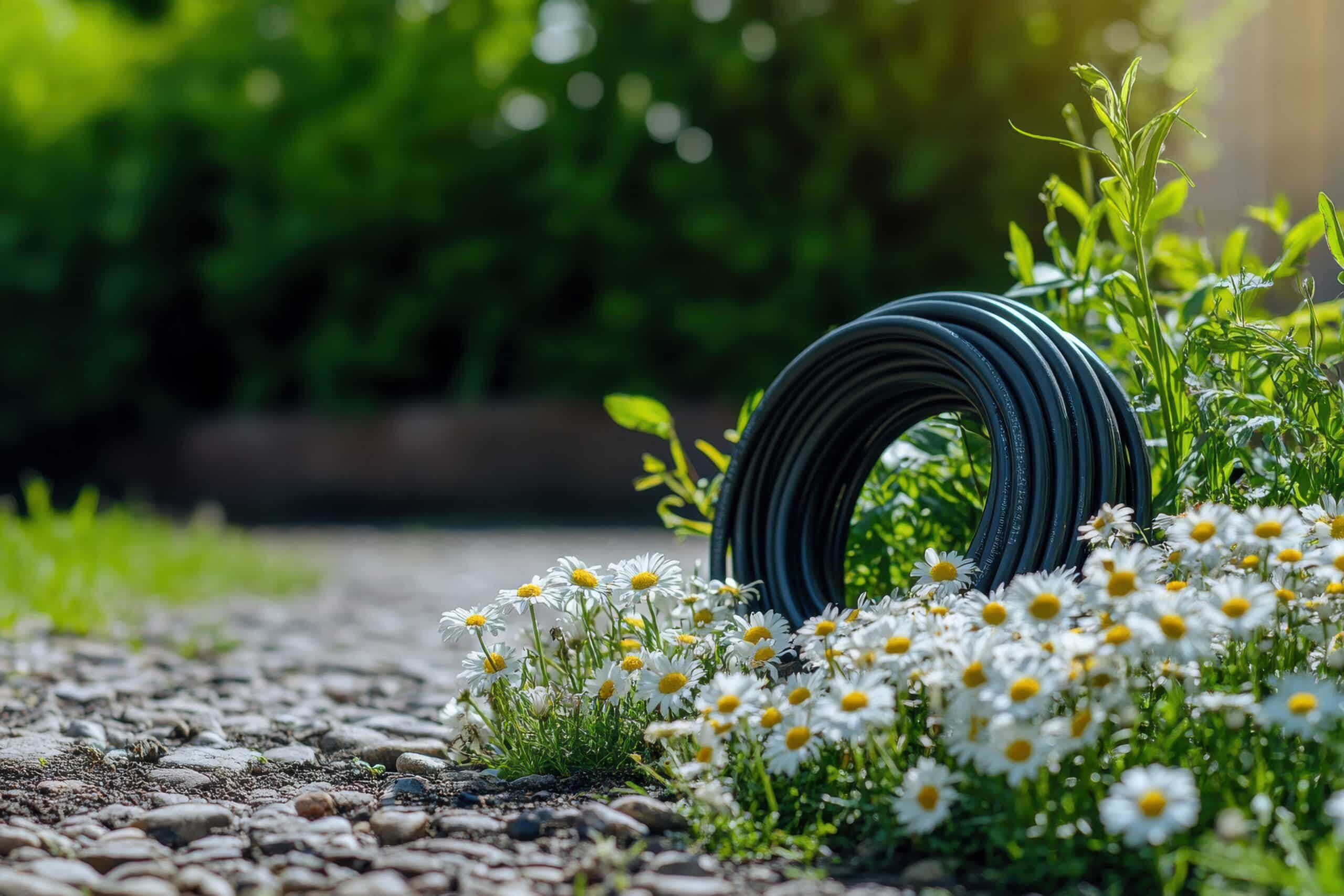
Most soaker hoses are made from recycled rubber or a woven polyethylene shell, both porous enough to let water seep through the whole surface rather than shoot out one end. Run it at low pressure and it weeps steadily; run it at full pressure and it either sprays like a sprinkler or splits.
That low, steady weep is the entire appeal. Water goes into the soil instead of the air, so there’s less evaporation than a sprinkler and none of the wet foliage that invites fungal disease. It also means a soaker hose waters a strip of ground, not a single point, which makes it a natural fit for rows, hedges, and foundation plantings rather than individual specimen plants.
Soaker hose vs drip irrigation
Both put water at the roots instead of in the air, and both save real water compared to sprinklers. The difference is control. A drip system uses separate emitters so you can give a thirsty tomato more water than a drought-tolerant lavender three feet away. A soaker hose puts out roughly the same amount along its whole length, no matter what’s planted next to it.
That makes a soaker hose the better choice for a single crop or a uniform planting, a vegetable row, a hedge, a foundation bed, and a drip system the better choice once you’re mixing plants with different water needs across several zones. I go through the full comparison, including cost and setup time, in soaker hose vs drip irrigation. For the mechanics of how it weeps water and where it makes sense, see what is a soaker hose.
Laying one out
Setup takes about ten minutes for a single bed:
- Loop it 6 to 12 inches from the base of each plant, or snake it down a row for a vegetable bed or hedge line.
- Cover it with mulch, an inch of soil or 2 to 3 inches of bark mulch. This cuts evaporation and hides the hose.
- Keep runs under 100 feet. Past that, pressure drops enough that the far end barely weeps.
- Add a pressure regulator if your spigot runs hot. Full city pressure bursts a soaker hose or turns it into a sprinkler. Covered in soaker hose pressure regulator.
How long to run it
Most extension guides land on about an inch of water a week, including rain, as a starting point. In hose time that’s usually 30 to 60 minutes, two to three times a week, adjusted for your soil: sandy soil drains fast and needs shorter, more frequent runs, clay holds water and needs longer, less frequent ones. The real test is a finger or trowel check 4 inches down an hour after watering. It should feel like a wrung-out sponge.
Where a soaker hose works best
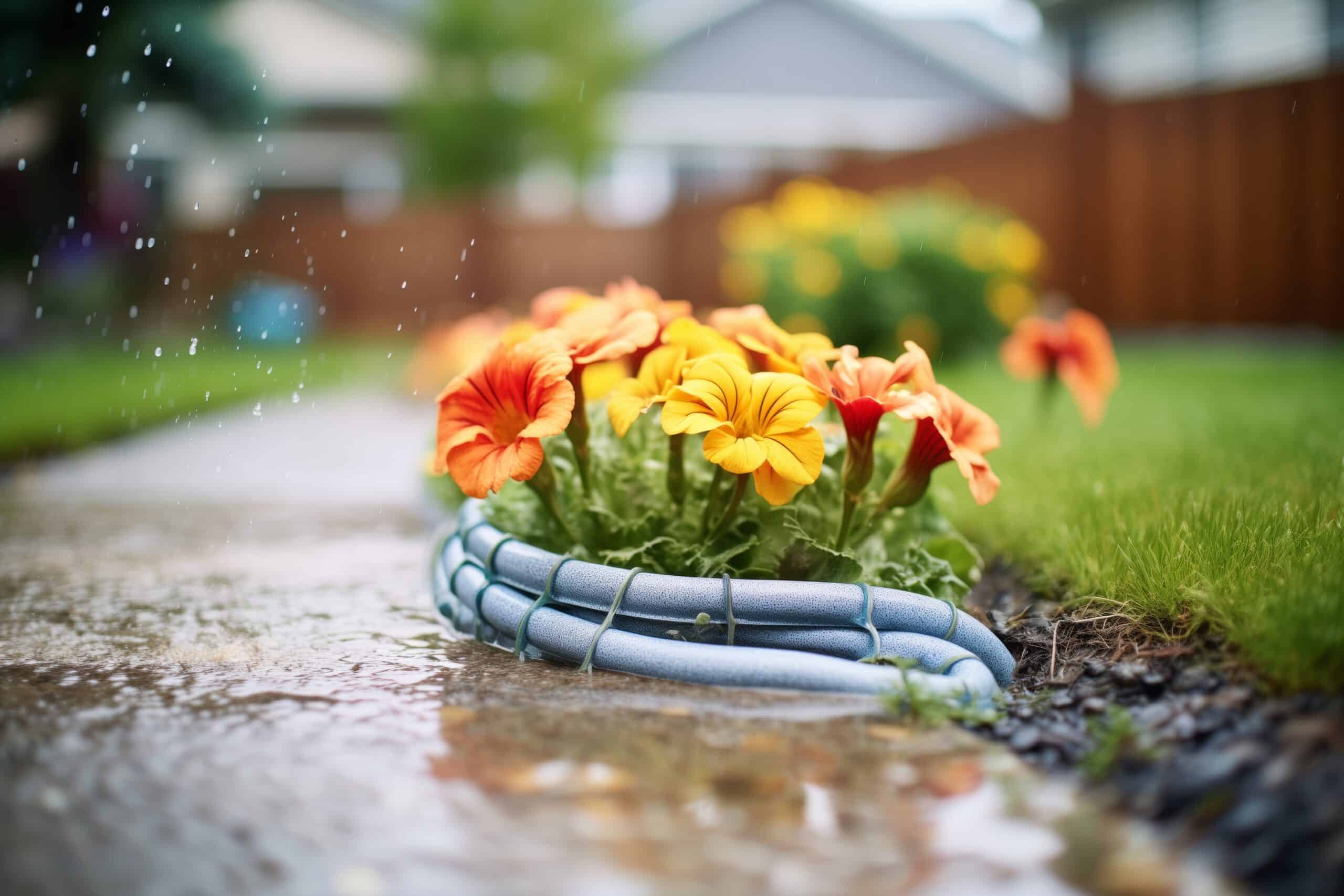
- Foundation beds. Keeping soil moisture steady around a slab on expansive clay soil is one of the most common uses. See foundation watering with a soaker hose.
- Trees and hedges. A loop at the drip line reaches feeder roots without wasting water on bare soil closer to the trunk. See soaker hose for trees and soaker hose for arborvitae.
- Fussy bloomers. Hydrangeas and similar plants that wilt fast in heat but hate soggy roots do well with the slow, even soak. See soaker hose for hydrangeas.
- Vegetable rows and raised beds. Simple, cheap, and easy to lift out at the end of the season.
Running it on a timer
A soaker hose without a timer is a chore you’ll eventually forget. Hose-end timers are a mature, boring product category, and the boring ones work great, screw one on and the whole setup becomes hands-off. What to look for is in best soaker hose timer.
Common mistakes
Running it at full pressure. If it’s spraying little fountains instead of weeping, the pressure is too high. A $10 regulator fixes it.
Watering a little every day. Daily sprinkles keep roots shallow. Deep soaks two or three times a week build a tougher, more drought-resistant plant.
Running it longer than 100 feet from one spigot. Split it into two shorter runs instead, or the far end will always be underwatered.
Skipping the mulch. Bare soaker hoses bake in direct sun, which shortens their life and increases evaporation before water even reaches the roots.
FAQ
How long do soaker hoses last?
Typically 3 to 5 years with normal use and mulch cover. Direct sun exposure without mulch can cut that in half.
Can a soaker hose be left on overnight?
It’s better run in the early morning. Overnight watering leaves soil damp for hours in cooler air, which is when slugs and fungal issues are most active.
Do soaker hoses waste water?
Less than almost any other method. Because water goes straight into soil rather than the air, evaporation loss is minimal compared to sprinklers.
Can I bury a soaker hose completely?
Up to an inch of soil is fine and actually improves efficiency. Deeper than that and it slows water reaching surface roots, which is where most plants actually feed.
A soaker hose is the cheapest, fastest way to get water off your foliage and onto your roots. For anything more complex than a single bed or row, the trade-offs against a full drip system are worth reading in soaker hose vs drip irrigation, and every plant-specific guide lives in Soaker Hoses.