

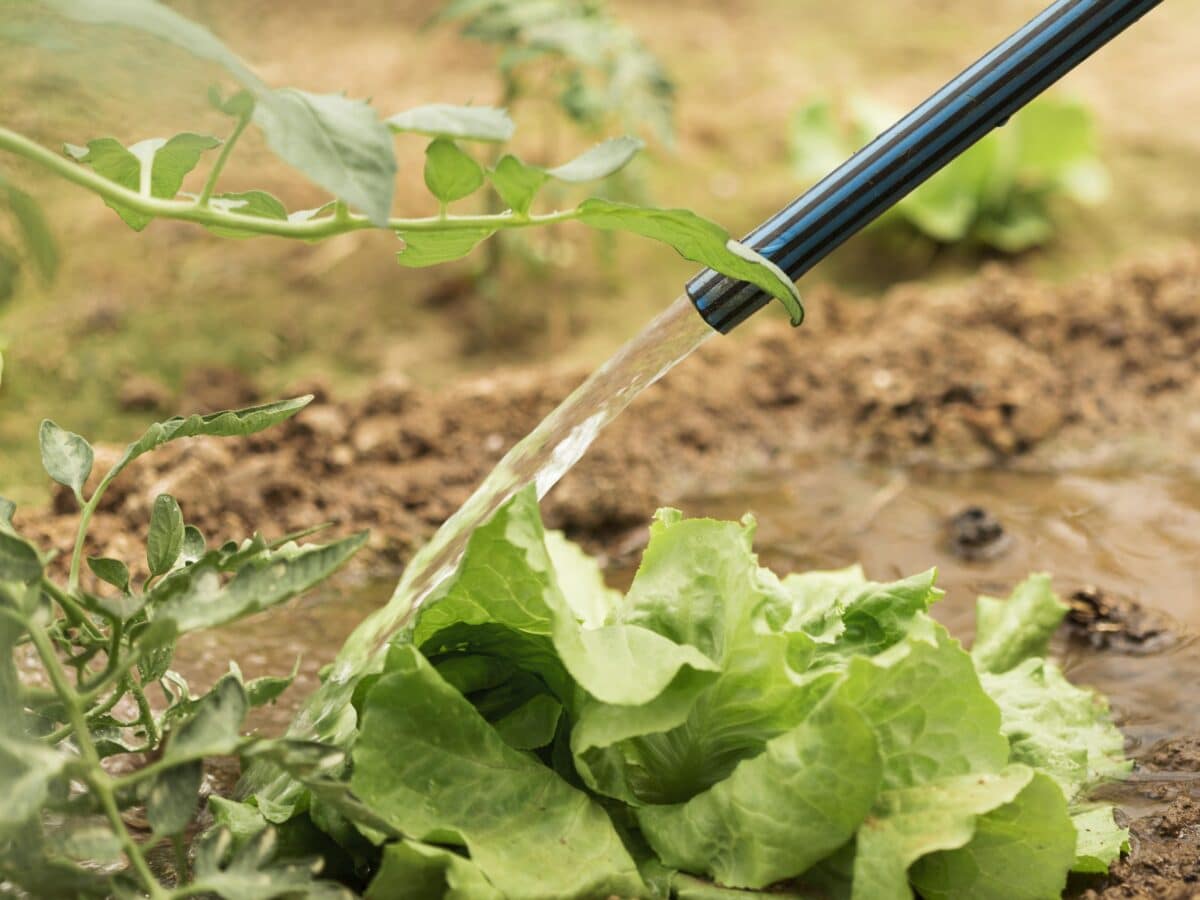
Ask five gardeners how long to run a soaker hose and you’ll get five different answers, mostly because they’re all watering different soil in different weather. But there’s a real starting point: most soaker hoses need 30 to 60 minutes per session, two or three times a week, to put down a solid inch of water. The exact number depends on your soil, your water pressure, and what’s actually planted, and the chart below walks through all three.
The quick answer
For a soaker hose at proper pressure (10 to 25 PSI, ideally through a pressure regulator), a 50-foot hose puts out roughly 0.5 to 1 gallon per foot per hour. Run it 30 to 60 minutes and most garden beds on average loam soil get close to the inch of water a week that vegetables and perennials generally want. That’s the baseline. Sandy soil, heavy clay, full sun, and container plantings all push that number up or down, sometimes by a lot.
Run times by planting type
These are starting points for a hose running at correct pressure on loam soil, not a guarantee for your yard. Treat them the way you’d treat a recipe’s cook time: check before you assume it’s done.
| What you’re watering | Run time | Frequency |
|---|---|---|
| Vegetable rows | 30-45 min | 2-3x per week |
| Flower and shrub beds | 30-45 min | 2x per week |
| Hedges and foundation plantings | 45-60 min | 1-2x per week |
| Newly planted trees | 60-90 min | 2x per week |
| Containers along a soaker line | 15-20 min | Daily in hot weather |
Notice these run times sit a little lower than typical drip irrigation numbers for the same plantings. A soaker hose spreads water along its whole length rather than through individual point-source emitters, so it’s covering more soil surface per minute in a bed. If you’re comparing the two systems directly, the full breakdown is in soaker hose vs drip irrigation.
Check your pressure before you trust any of these numbers
A soaker hose that’s fed too much pressure doesn’t weep evenly, it sprays in spots and starves at the far end, which throws every run-time estimate out the window. Before you set a schedule, confirm the hose is running at 10 to 25 PSI. If you’re not sure whether you need a regulator, most outdoor spigots deliver two to four times what a soaker hose is built for, so the honest answer is almost always yes. It’s a five-dollar part that makes every number on this page actually mean something.
Adjusting for soil type
Soil texture changes the math more than anything else on this list.
- Sandy soil drains fast and holds little. Cut run times by about a third and water more often, since long sessions just push water past the root zone.
- Clay soil absorbs slowly but holds water for days once it’s in. Run longer, less often, sometimes just once or twice a week for established plants. Watch for water pooling on the surface, a sign clay can’t keep up with the flow rate and you’d be better served running shorter sessions twice rather than one long one.
- Loam, the in-between soil most garden beds settle into over a few seasons, is where the baseline numbers above come from.
Adjusting through the season
A schedule set in May is usually wrong by August. As a rough guide, plan on adding 25 to 50 percent more run time (or an extra day a week) during summer’s hottest stretch, then tapering back down through fall. Skip a session entirely after real rain; half an inch is usually enough to replace a full watering for most beds. Come winter in a freezing climate, the hose comes off entirely, which is worth planning alongside your broader system shutdown if you’re also running drip zones (see winterizing your irrigation system for the full seasonal checklist).
The ten-minute check that replaces guesswork
Charts get you in the right range. This gets you exact, and it takes less time than reading this article did:
- Run a normal session on the schedule you’re testing.
- Wait about an hour for the water to settle into the soil.
- Dig a small hole 4 to 6 inches deep near the hose, not right on top of it.
- Feel the soil. You’re aiming for moist like a wrung-out sponge at that depth, not bone dry and not squeezing out water.
Dry at 2 inches means add 30 to 50 percent more time and test again. Mud or standing water means cut it back by a third; soggy roots suffocate just as reliably as dry ones kill a plant, they just take longer about it. Once you’ve dialed it in for a season, you’ll start reading the soil by feel and barely need the trowel.
Signs the schedule needs adjusting
Between dig tests, the plants themselves usually tell you first:
- Midday wilting that bounces back by evening is normal heat stress, not thirst. Don’t change the schedule off this alone, check the soil first.
- Wilting that’s still there at sunrise means the soil actually dried out. Water and bump up the run time.
- Yellowing lower leaves or a moldy smell near the hose usually points to overwatering, especially on clay. Pull back the frequency before the run time.
- Water pooling or running off away from the hose means the session is longer than the soil can absorb at once. Split it into two shorter sessions instead of one long one.
FAQ
How long should I run a soaker hose for a vegetable garden?
Start around 30 to 45 minutes, two to three times a week, on average soil. That’s a starting point pulled from a roughly one-inch-per-week target most vegetables want; check with the dig test above and adjust for your specific soil and the week’s weather.
Can I leave a soaker hose running overnight?
You can, but there’s rarely a reason to. Soaker hoses work at low pressure and low output, so an unattended overnight run risks overwatering a bed far past what it needs, especially on clay. A timer that shuts off after an hour or two is a cheap way to avoid finding out the hard way.
Does a longer soaker hose need more run time?
Not necessarily more time, but it does need more attention to pressure. Past roughly 100 feet, pressure drops off along the hose and the far end waters noticeably less than the near end, regardless of how long you run it. Splitting a long bed into two shorter hose runs usually beats stretching one hose to its limit.
How do I know if I’m underwatering versus overwatering?
The dig test is the most reliable single check: dry soil below 2 inches means underwatering, mud or standing water means overwatering. Plant symptoms can point the same direction, but they overlap enough between the two problems that soil, not leaves, should make the final call.
Get the pressure right, start from the chart above, then confirm with a dig test once and adjust from there. If you haven’t laid out the hose yet, how to install a soaker hose covers that step by step, and what is a soaker hose is a good primer if you’re still deciding whether it’s the right tool for your beds. More schedule guides live in Watering Schedules.