

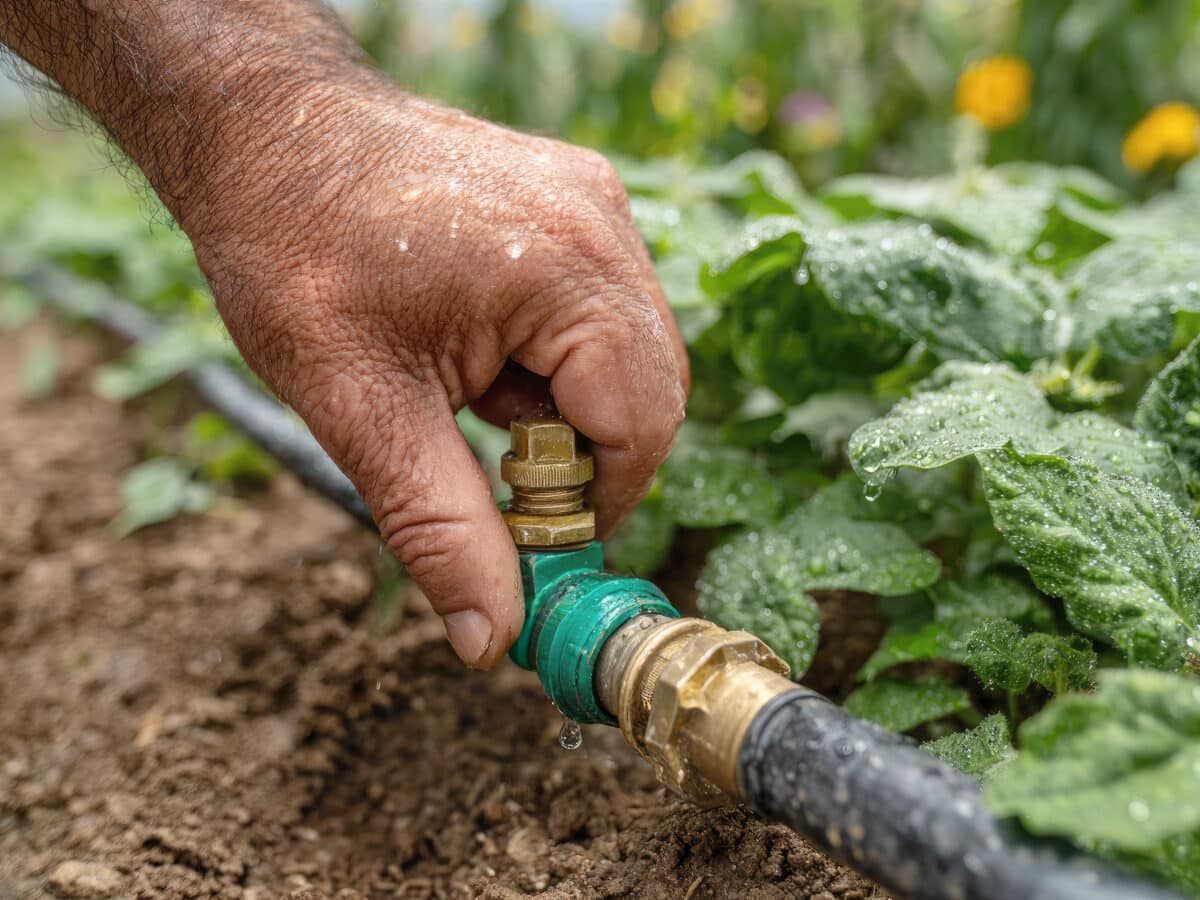
Water still comes out somewhere, just not where it’s supposed to. A handful of emitters have gone quiet, a section of tubing feels harder than it should, and the bed near the fence is drying out while the rest of the yard looks fine. That’s a clogged line, and out of every drip irrigation problem I get asked about, it’s the one I actually enjoy fixing. You get to watch the flow come back the second you clear it.
Most clogs fall into two families: mineral scale from hard water, or algae and biofilm growing inside warm, wet tubing. They look similar from the outside but need different treatments, so the first job is figuring out which one you’ve got before you reach for a bottle of anything.
Figure out what kind of clog you’re dealing with
Pull a suspect emitter or cut a small window in the tubing before you commit to a fix. What’s inside tells you almost everything.
| What you see | Likely cause | Best fix |
|---|---|---|
| White or gray crust, gritty to the touch | Mineral (hard water) scale | Vinegar soak, see below |
| Slimy, greenish-brown film, sometimes with an odor | Algae or bacterial biofilm | Diluted bleach or hydrogen peroxide flush |
| Fine grit or sand with no film or crust | Sediment that got past the filter | Flush the line, then check filter mesh |
| One emitter dead, neighbors fine | Isolated debris or a bad emitter | Replace that one emitter, they’re cheap |
| Whole zone weak, especially at the far end | Clog upstream, often the filter itself | Rinse the filter screen first |
If you’re not sure, start with a plain water flush. It’s free, it’s fast, and it solves the sediment cases outright without wasting vinegar or bleach on a problem they can’t fix.
What you’ll need
- White vinegar (for mineral scale)
- Unscented household bleach or 3% hydrogen peroxide (for algae and biofilm, use one or the other, never both)
- A bucket for soaking small parts
- Gloves and eye protection when working with bleach
- A garden hose with decent flow for the final rinse
- Replacement emitters, just in case a few are too far gone to save
Step-by-step: flushing the lines
This is the first move for almost every clog, and I do it on its own a couple of times a season even when nothing seems wrong. Grit and early-stage scale flush out easily. Give them a season to harden and they won’t.
- Shut off the water at the valve or timer before you open anything.
- Open the end caps on every line, they’re usually a simple cap or figure-eight fold at the far end of the tubing.
- Turn the water back on and let it run for one to two minutes per line, or until the water runs clear. The first burst is usually cloudy or gritty; that’s the point.
- Shut the water off again and reseal the end caps.
- Run the zone normally and check whether the problem emitters are back to working. If they are, you’re done. If not, move to a targeted soak below.
Dissolving mineral scale with vinegar
Hard water leaves calcium and mineral deposits that build up inside emitters and along tubing walls, narrowing the openings until they choke off entirely. Straight white vinegar handles this well because it’s mildly acidic and dissolves the mineral crust without damaging the plastic.
- For individual emitters: pull them out and soak in undiluted white vinegar for 30 to 60 minutes as a starting point, longer for heavy scale, then rinse and reinstall.
- For a whole line: cap the far end, disconnect the near end from the mainline, and fill the tubing with a mix of roughly equal parts vinegar and water using a funnel. Let it sit for a few hours, ideally overnight, then flush thoroughly with plain water before reconnecting to the system.
If scale keeps coming back season after season, the vinegar soak is treating a symptom. The real fix is usually softer water at the source or a switch to pressure-compensating emitters, which resist mineral buildup better than basic button emitters. More on emitter types in the drip irrigation emitters guide.
Clearing algae and biofilm
Warm tubing that sits full of standing water between waterings is basically a greenhouse for algae and bacterial slime. It shows up as a slippery film rather than a hard crust, and it tends to smell faintly sour or swampy when you cut into a bad section.
- Hydrogen peroxide method: mix a diluted solution, on the order of one part standard 3% hydrogen peroxide to ten parts water as a starting point, and flush it through the line the same way as the vinegar soak above. Let it sit for 20 to 30 minutes, then rinse thoroughly.
- Bleach method: a very dilute bleach solution (roughly a capful per gallon of water, adjusted down for shorter runs) works similarly, but needs a longer, more thorough final rinse since bleach residue can stress nearby plant roots if it reaches them at full strength.
Never mix bleach and vinegar or bleach and hydrogen peroxide together, the combination produces harmful fumes. Pick one treatment, rinse it completely out of the system, and don’t run the treated water anywhere near edible crops until you’ve flushed with plain water at least once more.
When unclogging isn’t worth it
A line that clogs once a season is worth cleaning. A line that clogs every few weeks, or one where the scale has hardened into a texture like sandpaper along most of its length, is telling you something a soak won’t fix. At that point, replacing the run costs less in time than the third or fourth cleaning attempt. The full decision framework, including when to patch versus replace tubing entirely, is covered in the drip irrigation repair guide.
Keep lines from clogging again
- Match your filter mesh to your water source. Well water and water with visible sediment usually need a finer screen than most kits ship with. The filter guide breaks down which mesh size fits which situation.
- Flush the lines two or three times during the growing season, not just once at spring startup. It’s the single cheapest thing you can do to prevent both scale and biofilm from getting a foothold.
- Keep tubing covered with mulch. Shade keeps it cooler, and cooler tubing grows less algae than a line baking in full sun all day.
- Rinse the filter screen monthly in the growing season, a clogged filter starves the whole zone and hides the real problem upstream.
These habits, plus the seasonal shutdown and startup routine, are laid out in full in the seasonal maintenance checklist, which is worth bookmarking if clogs have been a recurring headache.
FAQ
Can I use CLR or other commercial descalers instead of vinegar?
Some gardeners do, but plain white vinegar is cheaper, safe around plants when rinsed well, and strong enough for the mineral buildup most home systems deal with. Save commercial descalers for scale so severe that vinegar hasn’t made a dent after an overnight soak.
How often should I flush my drip lines?
Two or three times during the growing season is a reasonable starting point for most home setups, more often if your water is hard or your system has a history of clogging. Treat it as cheap insurance rather than a fix you only reach for once things stop working.
Is it safe to run vinegar or peroxide through lines near vegetables?
Yes, once thoroughly rinsed. Both break down quickly and are commonly used in food-growing settings, but always flush with plain water afterward and avoid watering edible crops with the treatment solution itself while it’s still concentrated.
Why does the same emitter keep clogging even after I clean it?
That usually means the water source itself is delivering more sediment or minerals than the filter is catching. Check the filter mesh size first, and if scale is the recurring culprit, consider pressure-compensating emitters, which have narrower internal pathways designed to resist buildup better than basic models.
A clogged line looks like a bigger problem than it is. Work through it in order, plain flush first, then a targeted soak for whatever’s actually inside, and most systems are back to full flow the same afternoon.