

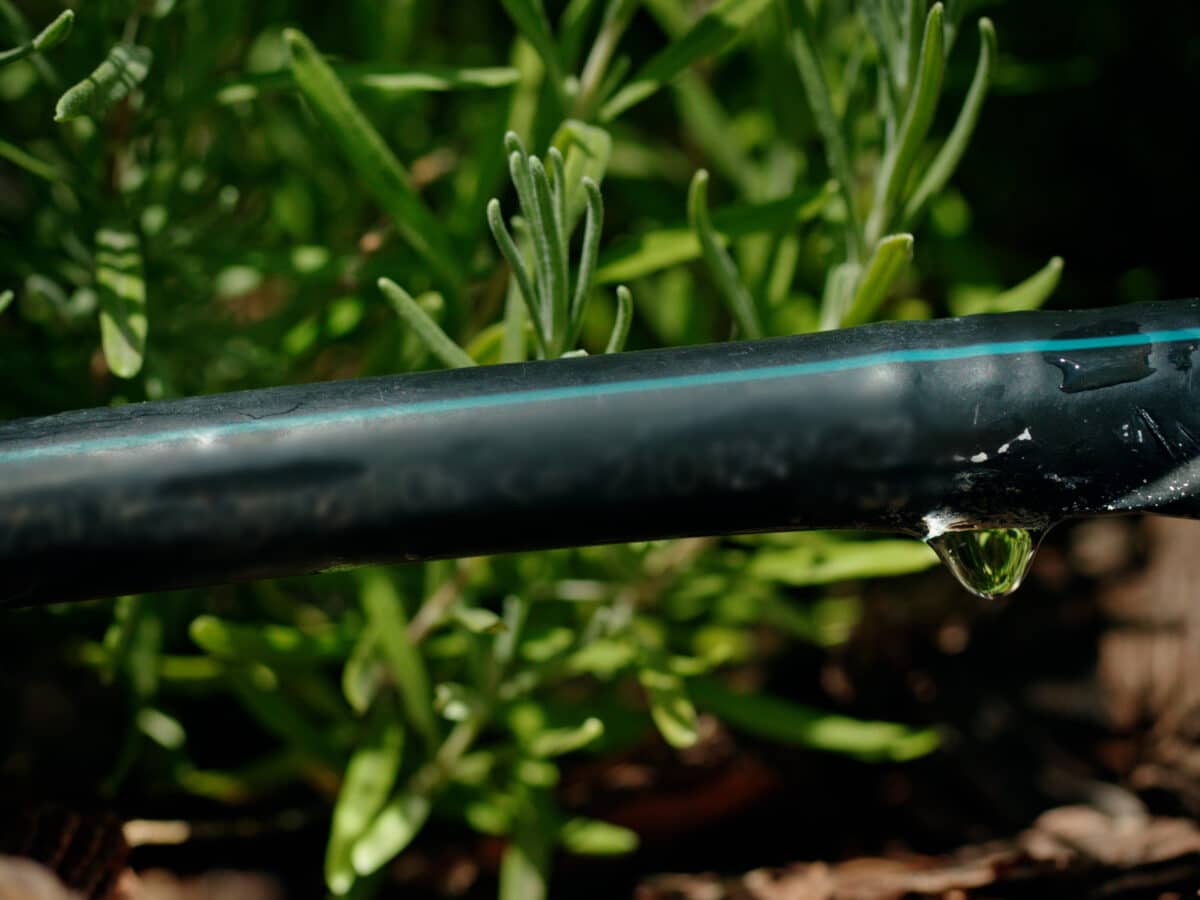
Most drip system problems announce themselves the same way: a slow decline in flow that nobody notices until half a bed is wilting. Flushing the lines is the five-minute habit that catches sediment and biofilm buildup before either one turns into a dead emitter or a full clog. This isn’t a repair. It’s the maintenance step that keeps you from needing one.
Here’s exactly how to flush a drip irrigation system, how often to actually do it, and the signs telling you it’s overdue.
Why flushing matters
Every drip line collects sediment over a season, even with a filter in place. Fine grit that slips past the mesh, mineral scale from hard water, and biofilm (a slimy layer algae and bacteria build up inside warm, wet tubing) all settle at the low points and dead ends of a line. None of it is enough to notice at first. Then one day the last few emitters on a run are barely damp, and the cause is usually months of buildup, not one single event.
Flushing pushes a burst of water through the open end of the line at full pressure, before it reaches the emitters, and carries that sediment out instead of letting it work its way into the small emitter openings where it actually causes trouble. It’s the same idea as blowing out a straw, and it takes about as long.
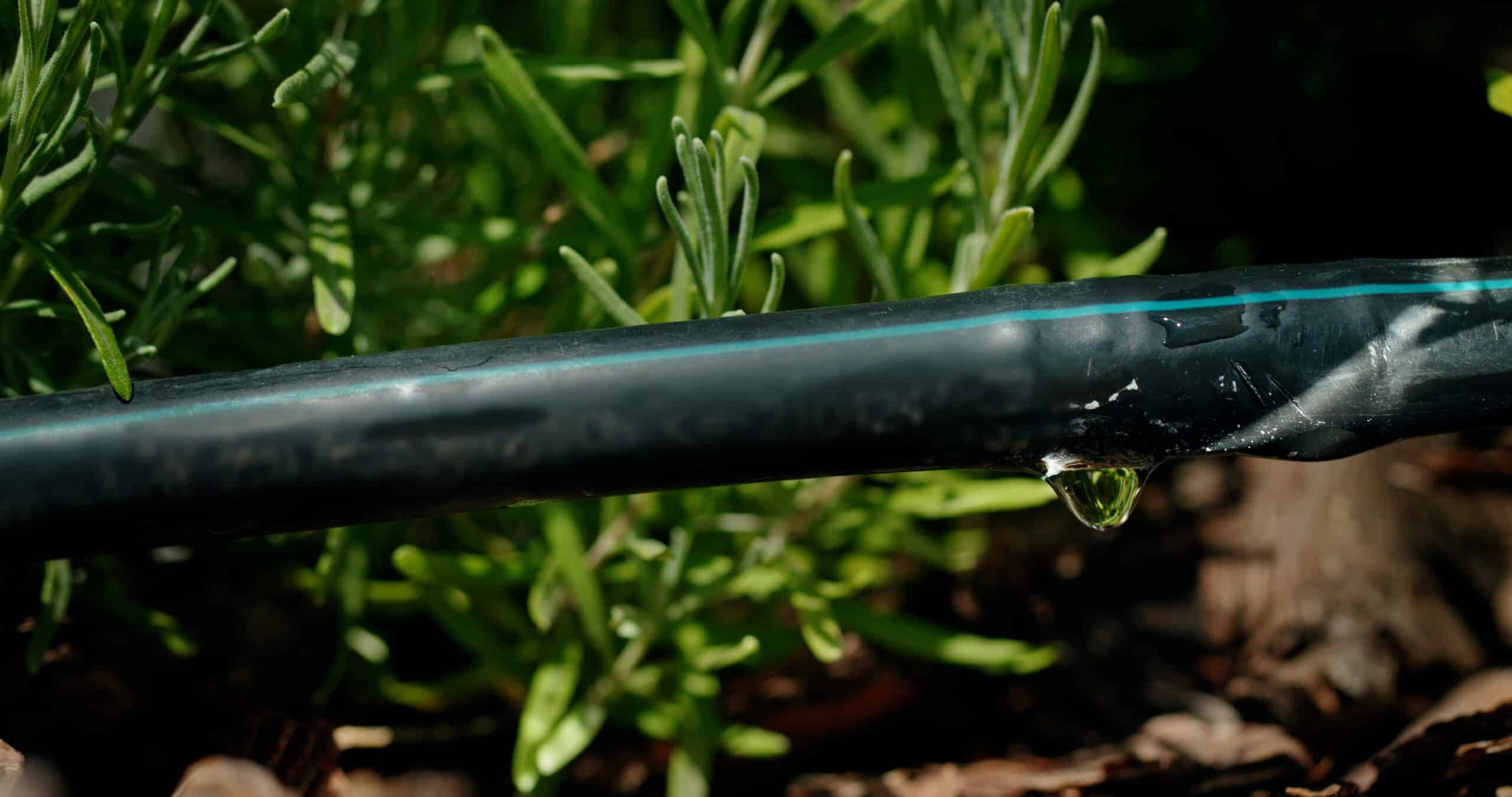
What you need
- Nothing extra, usually. Most drip and dripline systems are built with removable end caps for exactly this purpose.
- A bucket or a spot where runoff is fine, since you’ll be running water onto open ground or a drain area for a minute or two per line.
- A wrench or pliers, only if an end cap has corroded on and won’t turn by hand.
How to flush a drip irrigation system, step by step
- Turn off the timer and shut the water off at the spigot first. You don’t want the line pressurized while you’re opening end caps.
- Open every end cap on the system. Larger yards usually run several separate zones or mainlines, and each one needs its own end opened, not just the first line you find.
- Turn the water back on at full pressure, bypassing the pressure regulator if your setup allows it, or just running normally if it doesn’t. Full pressure clears sediment faster than the low pressure the emitters normally see.
- Let each line run open for 1 to 2 minutes, or until the water coming out runs clear instead of cloudy or gritty. A line that’s been neglected for a year or two may need closer to 3 minutes the first time.
- Cap the ends back up once the water runs clear, hand-tight is enough for most caps.
- Run a normal cycle afterward and check a handful of emitters along each line to confirm even flow before walking away.
If the system also has a filter at the spigot, this is the natural time to pull the screen and rinse it too. A clean filter feeding a freshly flushed line is about as clean a slate as a drip system gets.
How often to flush, as a starting point
There’s no single right answer here, it depends on water hardness, how much sediment your source water carries, and how many emitters are on each line. These are reasonable starting points; adjust based on what you actually see when you flush.
| Situation | Suggested frequency |
|---|---|
| Municipal water, moderate hardness | Once a month during the growing season |
| Well water or known hard water | Every 2-3 weeks |
| Spring startup, after winter storage | Always, before the first real watering cycle |
| Before winterizing in fall | Always, as part of the shutdown routine |
| New system, first season | Every 2 weeks for the first couple of months |
That last one catches people off guard, but a brand new system sheds manufacturing residue and fine plastic dust from the tubing itself for the first several weeks of use. I’ve pulled genuinely dirty water out of lines that were installed a month earlier and never watered anything but a driveway before. It settles down after that.
Signs your system needs a flush now
- Emitters at the far end of a run are drier than the ones near the spigot, even though nothing else has changed.
- Water coming out of an open end cap looks cloudy, gritty, or has a slight tint instead of running clear.
- You’re seeing more clogged individual emitters than usual, a sign the whole line is carrying more sediment than the filter is catching.
- It’s been a full season since the last flush and you genuinely can’t remember doing one.
Flushing vs. unclogging: not the same job
Flushing is preventive. It clears out the sediment sitting in the mainline and dripline before it reaches an emitter and jams it. Unclogging is what you do after an emitter has already stopped working, and it usually means pulling that specific emitter and soaking it, not just running water through the system. If you’re past the prevention stage and dealing with individual dead emitters right now, the full process is in how to unclog drip irrigation lines. Flushing regularly is what keeps you from needing that guide as often.
It’s worth pairing a flush with a broader look at the system too. If clogs keep showing up in the same spots no matter how often you flush, something further upstream, like a failing filter or a pressure issue, is probably feeding the problem. The full drip irrigation repair guide walks through diagnosing that by symptom.
Common mistakes
Flushing with the pressure regulator still restricting flow
A working regulator does its job well, which is exactly the problem here: it keeps pressure low, and low pressure doesn’t clear sediment nearly as fast as a full-force flush. Bypass it during the flush itself if your fittings allow it, then put it back before running a normal cycle.
Only flushing the first line you see
On a multi-zone system, sediment doesn’t distribute evenly. The zone furthest from the spigot, or the one that’s been running longest without attention, is often the worst offender, and skipping it defeats the point.
Skipping the filter check
Flushing the lines without cleaning the filter is treating half the problem. Details on filter mesh size and cleaning schedule are in drip irrigation filters if you’re not sure what you’re working with.
Never flushing at all until something breaks
This is the most common mistake by far. A system that’s never been flushed isn’t broken until suddenly it is, usually mid-summer, usually at the worst time.
FAQ
Can I flush a drip system without opening the end caps?
Not effectively. Running water through a closed system just circulates it through the same emitters you’re trying to protect. Opening the ends is what lets sediment actually leave the line instead of getting pushed toward the last emitter in the row.
Does flushing help with algae, or just mineral sediment?
Both, to a degree. A plain water flush clears loose algae and grit, but an established biofilm coating the inside of the tubing usually needs more than water pressure alone. A diluted vinegar rinse through the line, left to sit for 20 to 30 minutes before flushing clear, handles that better.
Should I flush before or after fertilizing through the system?
After, generally. A quick flush post-fertigation clears any residue that could otherwise crystallize inside the tubing or emitters, particularly with liquid fertilizers that aren’t fully soluble.
How long does a full flush take for an average yard?
For a typical residential setup with two or three zones, budget 10 to 15 minutes total, most of it just watching water run clear out the open ends.
Flushing is one of the few maintenance tasks on a drip system that costs nothing but a few minutes and some running water, and it’s the single habit most likely to keep you off the repair guide entirely. Fold it into the same seasonal rhythm as the rest of your upkeep; the full rundown of what else belongs on that calendar is in the seasonal maintenance checklist.