

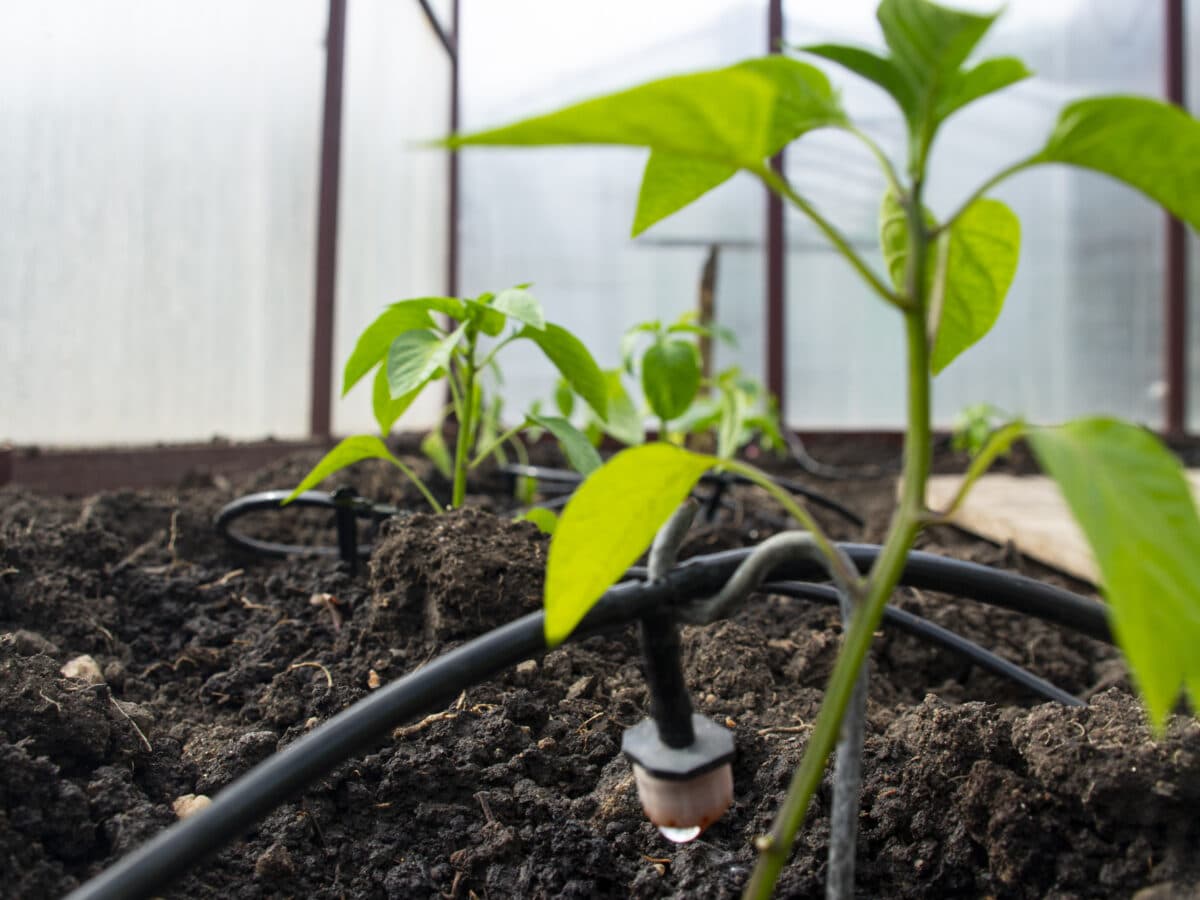
No water coming out of your drip system is rarely a mystery once you know where to look, even though it feels like one standing in a dry garden at 7am. The cause almost always sits in one of six spots, and they’re worth checking in order: cheapest and easiest first, most involved last. Work the chain from the spigot outward instead of guessing at the far end of the yard, and you’ll usually be back up and running before your coffee’s cold.
Work the checks in order, not at random
A drip system is a chain: power, supply, filter, pressure, line, emitter. If an early link is broken, nothing downstream matters yet, so resist the urge to start pulling tubing apart at the far end of the garden. Walk it start to finish instead.
- Timer and valve. Start here, it’s the most common culprit and the fastest to rule out. Dead or corroded batteries are the single biggest reason a drip system does nothing at all, and a dim or blank display is the tell. While you’re there, check that the program didn’t get reset to “off” (it happens after a battery change or a power blip on plug-in models) and that any manual valve behind the timer is actually open, not just the timer itself.
- Main water supply. Sounds obvious, but it’s the second most common miss. Confirm the spigot is fully open, not just cracked. If there’s a whole-house shutoff or a winterizing valve upstream of that spigot, make sure it got reopened in spring. On a splitter with multiple valves, it’s easy to open the wrong outlet and leave the drip line’s valve closed. Quick test: disconnect the drip assembly and run the spigot alone. No flow there means the problem isn’t the drip system at all.
- The filter. A filter clogged solid stops water cold instead of just slowing it, especially right after installation when construction grit or old pipe scale gets flushed through for the first time. Unscrew the housing and check the screen. If you can’t see light through it, that’s your answer.
- The pressure regulator. Regulators fail two ways relevant to a total stoppage: stuck fully shut, or installed backwards, which blocks flow completely on some models and just restricts it heavily on others. Check the small arrow stamped into the housing, don’t assume it’s right just because you’re the one who put it in. If the orientation is correct and you’re still getting nothing, disconnect the regulator and check for flow at the spigot directly. Water there but not past the regulator means it’s stuck, and regulators don’t get repaired, they get swapped for a new one.
- A kink or a closed end cap. Walk the mainline end to end. A parked wheelbarrow, a garden cart, or a root growing under the tubing can pinch it flat enough to stop flow entirely, and it’s easy to miss in a bed full of foliage. Also check that end caps got reopened after the last flush; a cap left closed on a line with only one outlet blocks everything behind it.
- Some emitters clogged versus all of them. This last check tells you whether you’re actually looking at a “no water” problem or something else entirely. If literally nothing drips anywhere, even from the emitter closest to the spigot, the cause is upstream, and it’s one of the five checks above. If the near emitters flow fine but the far end of a long run is dry, you’re not dealing with a no-water problem at all. That’s an overextended zone or a clog partway down the line, and it belongs in the repair guide instead.
When it’s bigger than a two-minute fix
Most of the time, one of the six checks above finds it. Occasionally the cause is bigger:
- A stuck backflow preventer. These rarely fail, but when they do, they block flow completely rather than partially. Replacement is usually a small, inexpensive part, though anything tied into your home’s plumbing rather than just the hose bib is worth handing to a plumber if you’re not comfortable with it.
- A buried break in the mainline. If a supply line runs underground before it reaches the drip zone, a shovel strike or a settling tree root can sever it completely, and you’ll get nothing no matter how many valves you open. Listen and look for a soggy patch of lawn that stays wet on a dry week; that’s usually where it is.
- A well or house-wide pressure problem. If an indoor faucet is also weak or dead, the drip system was never the actual problem. Check the tap before you spend another minute at the spigot.
If none of that applies and the six checks above all came back clean, that’s actually good news. It means the fault is small and isolated, and a second pass through the checklist tends to catch it, especially the timer battery and the filter screen, the two I see missed most often. Most drip irrigation problems and solutions really do come down to something this ordinary.
FAQ
Why does my drip system have water some days and not others?
That pattern points to something intermittent rather than a hard failure: a timer battery that’s weak but not dead, a shared irrigation zone competing for pressure with a neighbor or another zone on the same line, or a well pump that’s marginal under simultaneous demand. Marginal batteries are the most common cause by far, so replace them before chasing anything more complicated.
I checked everything on this list and I’m still getting nothing. What now?
Isolate the drip system from the rest of your water supply before troubleshooting further. Check an indoor faucet; if it’s also weak or dry, the problem is upstream of your house entirely and no amount of work on the drip system will fix it. If indoor water pressure is normal, go back through the six checks a second time. It’s genuinely common to miss the timer battery or a half-open valve on the first pass.
Can low pressure alone stop water from coming out at all, or does it just make it weaker?
Usually just weaker, not zero. A drip system not enough pressure to run well still tends to produce something, a thin trickle at the near emitters and nothing at the far end of the run. True zero flow at every single emitter almost always means a closed valve, a clogged filter, or a stuck regulator rather than pressure alone. If a $15 gauge on the hose bib shows healthy supply pressure and you’re still getting nothing, stop suspecting pressure and go back to the checklist above. If the gauge does show weak pressure, look at the well pump, a partially closed valve further upstream, or a regulator that isn’t matched to what your supply can deliver before you look for ways to increase pressure in your drip irrigation system.
Once you’ve traced the cause with this checklist, the actual fix is usually quick. For step-by-step repairs once you know what’s wrong, see the drip irrigation repair guide. If the filter turns out to be the recurring problem, drip irrigation filters covers mesh sizes and cleaning schedules. For everything about the regulator, including which PSI rating to buy, see pressure regulator for drip irrigation. And to keep this from happening again, the seasonal maintenance checklist walks through the five-minute routine that catches most of these problems before they turn into a “why is nothing dripping” afternoon.