

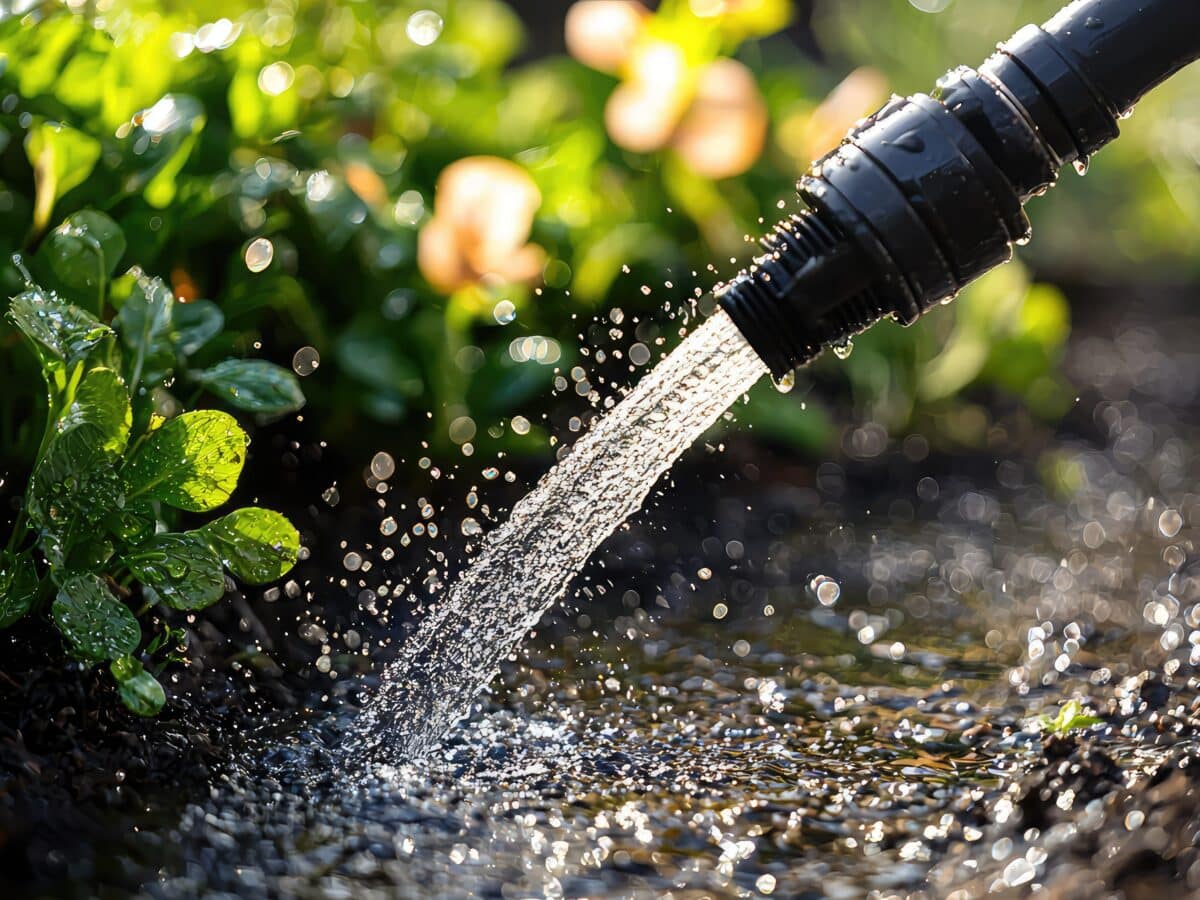
Drip systems fail in boring ways. After enough seasons fixing them, I can tell you the service call is almost always one of three things: a clog, a leak, or a pressure problem. None of them need a pro, and most take under ten minutes with a $2 part.
This guide is organized by symptom, because that’s how you actually meet the problem: something looks wrong, and you work backwards to the cause.
The repair kit that covers 95% of problems
- A handful of goof plugs (they seal misplaced holes)
- A few 1/2-inch and 1/4-inch barbed couplings
- Sharp scissors or pruning shears
- A punch tool
- White vinegar for descaling emitters
Total cost: about $10, and most of it lives happily in a coffee can in the garage for years.
Symptom: one emitter stopped dripping
That’s a clog. Mineral scale from hard water is the usual suspect, with algae or a speck of debris as runners-up.
Pull the emitter out and look at it. White crust means scale. Drop it in a cup of white vinegar for 30 minutes, rinse, and poke it back in. If it’s a cheap button emitter (they cost a quarter), skip the spa treatment and just replace it. While you’re in there, check the filter at the spigot, because one clogged emitter often means more on the way.
Symptom: a whole zone went quiet at once
All emitters slowing or stopping together points upstream, not at the emitters. Work this order:
- Timer. Dead batteries are embarrassingly common. If the display is blank or faded, start here.
- Filter. Unscrew it and hold the screen up to the light. If you can’t see through it, neither can water. Rinse it.
- Mainline kink or crimp. Walk the 1/2-inch line. A garden cart wheel, a shovel, or an ambitious root can pinch it flat.
- Shutoff valve. If the zone has one, check it got reopened after whatever you did last month.
Symptom: a geyser, a puddle, or a squishy spot
That’s a leak, and its personality tells you the cause:
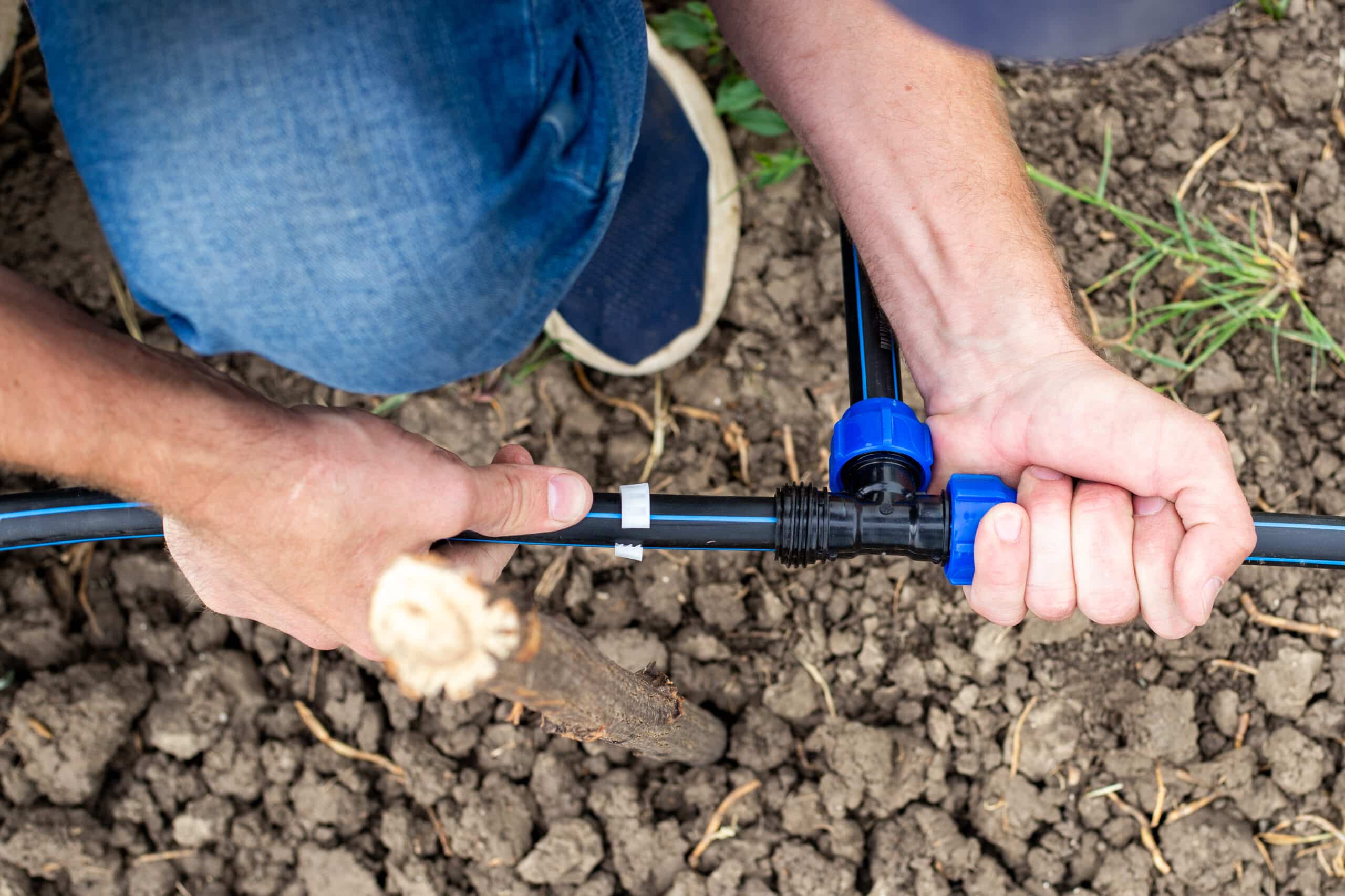
- Spray at a fitting: the tubing worked loose, or the end shrank. Cut an inch off the tubing end and push it back on. Barb fittings seal best on fresh tubing.
- A pinhole fountain mid-line: a puncture. Shovel, thorn, dog, pick your villain. For a clean small hole, push in a goof plug. For anything bigger, cut out the damaged section and bridge it with a coupling.
- A long split: freeze damage or old age. Cut it out and couple in a new piece. If you’re patching the same line every spring, the run is done. Replace it.
Symptom: emitters misting or spraying instead of dripping
Pressure is too high. Drip parts are built for about 25 PSI, and household spigots deliver 40 to 80. Without a working regulator, emitters spray, fittings weep, and something eventually lets go at 2 a.m. Check that the pressure regulator is still in line and still functional. They last for years, but they’re not immortal. If yours is missing or ancient, a $10 replacement fixes the whole system. Details in pressure regulator for drip irrigation.
Symptom: strong flow near the spigot, weak at the far end
You’ve outrun the zone. Every zone can only push so many gallons per hour, and a long run with too many emitters divides the flow until the far end gets a sad trickle. Two fixes:
- Split the run into two zones with their own valves or timers.
- Swap some emitters for lower-flow versions (0.5 GPH instead of 1 GPH) so the total demand drops.
As a rough ceiling, keep 1/2-inch mainline runs under 200 feet and total emitter output under about 150 GPH per zone.
Symptom: clean bite marks or chewed sections
Rodents and rabbits learn that tubing contains water, and they go looking for it in dry spells. Repair the chewed spot with a coupling like any puncture. Then make the line less attractive: bury it an inch under mulch, or switch the problem stretch to a section of soaker hose, which chewers seem to find less interesting. In hard-hit areas, some gardeners run lines through short lengths of old garden hose as armor. It looks odd and it works.
Repair or replace?
Poly mainline tubing lasts 10 years or more in the ground. Dripline with built-in emitters goes 5 to 8 before the emitters scale up one by one. Individual button emitters are the consumables: cheap, and fine to treat that way.
My rule: one or two problem spots, repair. A line that needs a third patch in a season, or tubing that’s gone chalky and brittle in the sun, gets replaced. Fighting dying tubing all summer costs more time than a $20 roll of new line.
Staying ahead of repairs
A five-minute routine prevents most of the above:
- Rinse the filter screen monthly in the growing season.
- Open the end caps twice a year and flush the lines for two minutes.
- Walk the system while it runs every couple of weeks. Geysers and dry spots announce themselves if you look.
- Drain everything before the first hard freeze. The full routine is in winterizing your drip irrigation system, and it eliminates the split-tubing category entirely.
FAQ
How do I find a leak I can’t see?
Run the zone and walk the line slowly, listening for hissing and watching for soil that darkens or bubbles. In mulched beds, leaks hide under the mulch, so feel for soft, spongy ground with your foot. The wettest spot in the bed on a dry week is usually your culprit.
Can you repair a soaker hose the same way?
Small punctures, yes: a goof plug or a coupling works. But soaker hose that has started weeping in random new places along its length is wearing out, not damaged. Patching won’t restore it. Replace the run.
Why do my emitters keep clogging even with a filter?
Two possibilities. The filter mesh is too coarse (you want 150 mesh for drip), or the clog is biological: algae or bacterial slime growing inside lines that sit warm and wet. Flushing the lines monthly and keeping them covered with mulch fixes most biofilm problems. Chronic cloggers can also switch to pressure-compensating emitters, which resist plugging better than basic buttons.
Is it worth repairing a cheap timer?
Almost never. The failure is usually the internal valve diaphragm, parts aren’t sold, and a new reliable timer is $25 to $40. Replace it and write the install date on the back with a marker so you know its age later.
Keep the coffee-can repair kit stocked and these fixes stay minor annoyances instead of dead-plant emergencies. Everything else in this category lives under Maintenance & Repair, and if clogs keep recurring, the emitter deep-dive is at drip irrigation emitters.