

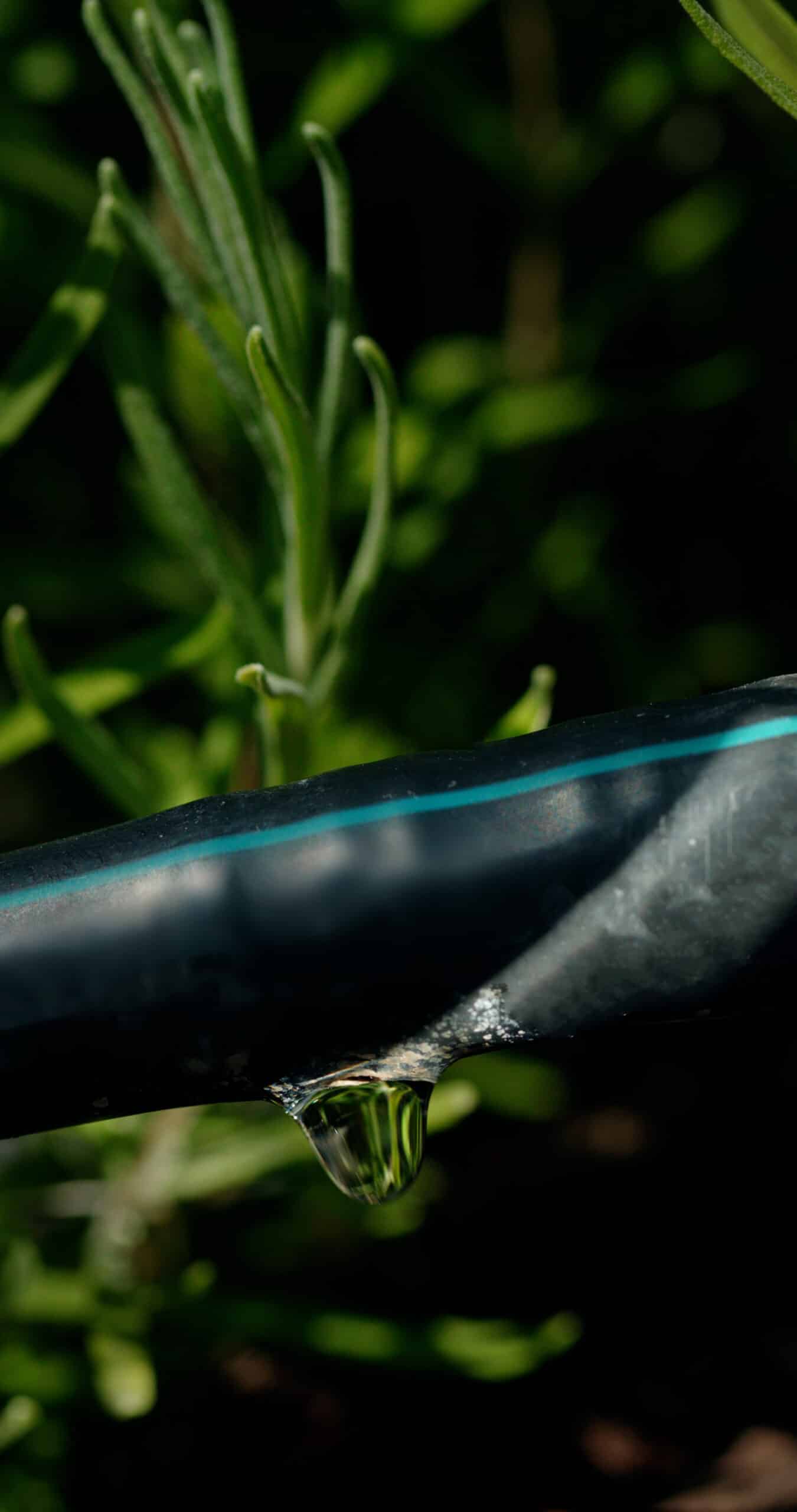
Emitters are where drip irrigation actually happens. Everything else in the system, the tubing, the filter, the regulator, exists to deliver calm water to these little plastic nozzles. Choosing them takes about five minutes of learning, and the wrong choice shows up as chronically thirsty or drowned plants.
The three numbers that matter
Emitters are rated in gallons per hour (GPH) at a reference pressure, usually 25 PSI:
- 0.5 GPH — herbs, small annuals, succulents, anything modest in a pot
- 1 GPH — the default. Perennials, peppers, lettuce, most shrubs when young
- 2 GPH — tomatoes, roses, established shrubs, thirsty plants in warm soil
- 4 GPH and up — trees and large shrubs, where one big drip beats a puddle from three small ones
Colors are code, not decoration: each manufacturer colors emitters by flow rate. Learn your brand’s code once and you can read a system at a glance.
Standard vs pressure-compensating
Standard emitters flow more at higher pressure and less at lower. On flat ground with short runs, fine, and they’re cheaper.
Pressure-compensating (PC) emitters contain a little diaphragm that holds flow steady from about 15 to 50 PSI. On a slope, at the end of a long line, or anywhere pressure varies, PC emitters deliver the same gallonage to the first plant and the last. They cost a bit more and are worth it on any uneven or large layout.
Rule of thumb: flat bed under 100 feet of tubing, standard is fine. Anything else, go PC and stop thinking about it.
Button emitters vs dripline
Two ways to get emitters into a system:
Button emitters punch into the mainline or sit at the end of micro tubing, one per plant (or two or three for big ones). Precise, flexible, ideal for shrubs, trees, containers, and widely spaced vegetables.
Dripline has emitters molded inside the tubing every 6, 12, or 18 inches, commonly 0.5 or 0.6 GPH each. Lay it in rows and the whole strip waters evenly: raised beds, hedges, vegetable rows. The bed layout is covered in drip irrigation for raised beds.
Most gardens use both: dripline in the beds, button emitters at the roses and the lemon tree.
How many emitters per plant?
The question everyone asks, with the honest answer:
- Small plants (herbs, lettuce, annuals): one 0.5 or 1 GPH
- Medium (peppers, perennials, small shrubs): one 1 GPH, or two for sandy soil
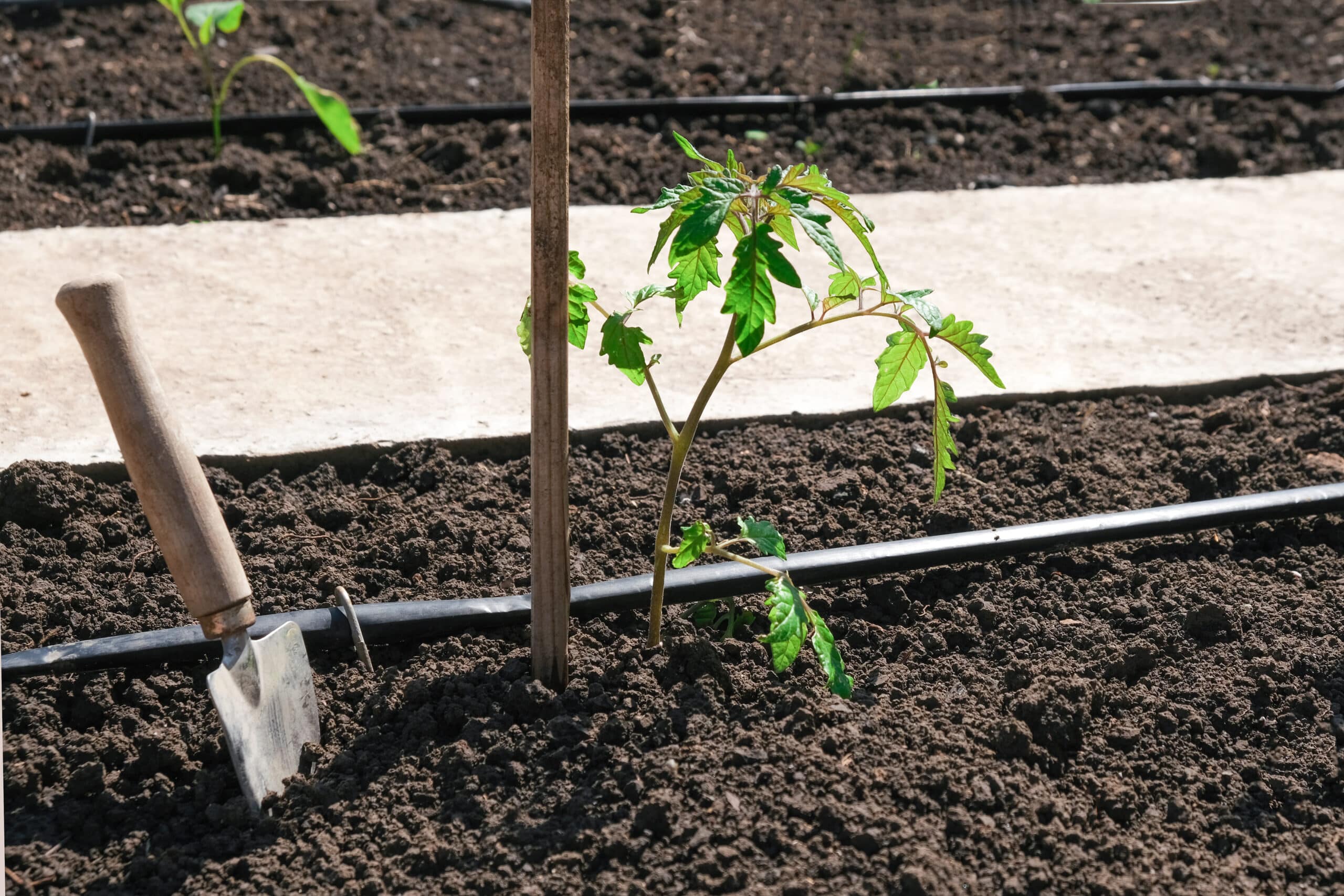
- Large (tomatoes, roses, established shrubs): two 1 GPH or one 2 GPH, on opposite sides of the root ball
- Trees: two to four 2 GPH emitters ringed at the drip line, added as the canopy widens
Two smaller emitters beat one big one for anything with a spreading root system, because they wet a wider slice of soil. And place them at the canopy edge, not the stem: that’s where the feeder roots are.
Keeping them dripping
Emitters clog. It’s the system’s one chronic complaint, and it’s manageable:
- Filter first. The 150-mesh filter at the spigot stops most of what clogs emitters. Clean it monthly until you know your water.
- Flush the lines a couple of times a season by opening the end caps for a minute.
- Walk the line monthly. A dry plant next to a working system means a clogged or popped emitter. Most can be rinsed or snapped open and flushed; at 30 cents each, replacing is fine too.
If clogs are constant, your water is the issue, not the emitters; the repair guide covers the deeper fixes in drip irrigation repair.
Micro sprayers: the exception worth knowing
Micro sprayers and bubblers are emitters that throw a small fan or stream instead of a drip. They have real uses, groundcover blankets, containers that need surface wetting, but they give up drip’s main advantage by putting water in the air where some evaporates. Treat them as a specialty tool, not a default.
FAQ
What GPH should I use for tomatoes?
Two 1 GPH emitters per plant (or one 2 GPH) is the standard answer, run long enough for deep soil moisture. Consistency matters more than rate for tomatoes: swings between dry and soaked are what split fruit and trigger blossom end rot.
Can I mix emitter brands?
Mostly yes. Barbed fittings are close to universal. The risk is color codes that mean different flow rates across brands, so label or keep a note of what’s what.
Why are my emitters spraying instead of dripping?
Pressure too high. The system wants 25 PSI from a regulator, and without one, emitters mist or pop off entirely. See pressure regulator for drip irrigation.
How long do emitters last?
Years, if the filter does its job and you flush seasonally. PC emitters have more parts and slightly shorter lives, but five-plus years is normal either way.
Start with a bag of 1 GPH buttons and a roll of dripline, and you can water almost anything in a home garden. The rest of the parts catalog, from tubing sizes to timers, lives in Components & Parts.