

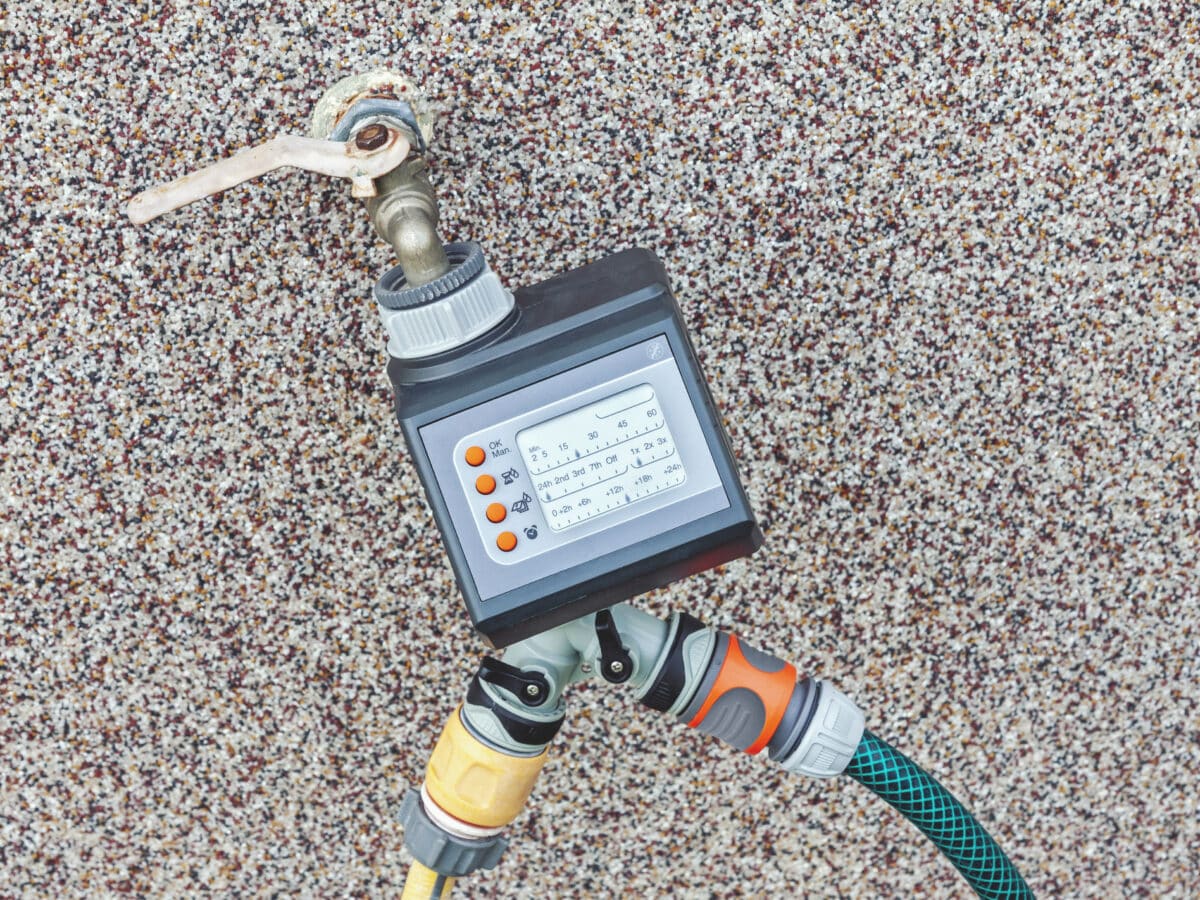
A soaker hose without a timer is a commitment. A soaker hose with a timer is a system. The good news: hose-end timers are a mature, boring product category, and the boring ones work great. Here’s what actually matters when choosing one, and what you can safely ignore.
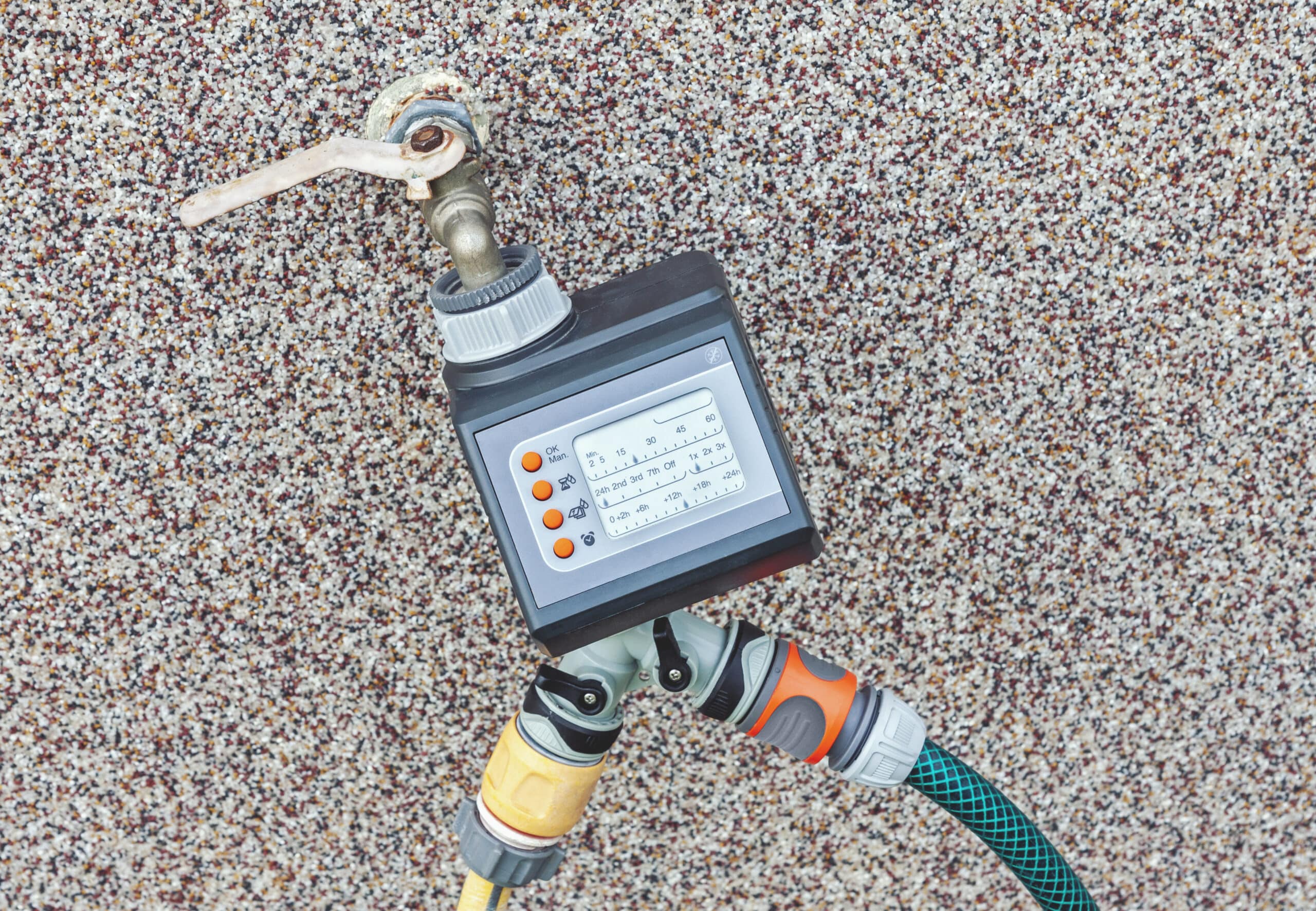
The features that matter
Run duration range. Soaker hose sessions are long: 30 minutes to 2 hours is normal, where sprinklers run 5 to 15 minutes. Check that the timer allows run times up to at least 120 minutes. Some cheap models cap at 60, which forces awkward double programs.
Frequency flexibility. You want at minimum daily and every-2-days options, ideally specific-day-of-week programming. Deep watering on a 2 or 3-day cycle beats daily sprinkles for most plants, so “every 6 hours” gimmicks are useless but “every 3 days” is gold.
Manual override button. One press runs a session now without disturbing the program. You’ll use it constantly: after planting, before a heat wave, to test the line. Every decent timer has one; any that doesn’t is a pass.
Rain delay. Suspends the schedule for 24 to 72 hours after rain, then resumes. Simpler and more reliable than soil sensors at this price point.
Single zone or dual zone?
A single-outlet timer runs everything at once. Fine for one bed or one hedge.
A dual-outlet (two-zone) timer runs two schedules from one spigot. This is the upgrade worth taking the moment you have two areas with different needs: vegetables that want water every other day and a foundation line that wants a little daily, say. It’s cheaper than two timers plus a Y-connector, and tidier.
Beyond two zones, hose-end timers stop making sense and it’s time to look at a proper multi-zone controller, which is a different purchase.
Smart timers: worth it?
WiFi timers connect to an app, adjust for weather forecasts, and let you run the hose from a beach. Honest assessment: the weather-based skipping is genuinely useful, the remote control is fun twice, and the app dependency is annoying when the company’s server hiccups. If the price gap is small, get the smart one for the rain handling alone. If it’s double, the dumb timer plus your own rain-delay button does 90 percent of the job.
Whatever you buy, check two unglamorous specs:
- Working pressure range. Should cover your spigot’s 40 to 80 PSI. Nearly all do.
- Battery type and life. AA batteries, one season minimum. Change them every spring either way, because a dead timer in a July heat wave is a silent plant killer.
Where the timer sits in the line
Order at the spigot, always:
- Timer, directly on the spigot
- Backflow preventer
- Pressure regulator (soaker hoses want 10 to 25 PSI; see soaker hose pressure regulator)
- Leader hose, then the soaker hose
The timer goes first because it’s the only part that can handle full supply pressure and it needs to control everything downstream. Hand-tighten, and hang the assembly so its weight isn’t levering on the hose bib if your spigot is low.
Programming for a soaker hose
A sane starting program for most gardens:
- Start time: early morning, 5 to 7 AM. Less evaporation, and foliage that gets splashed dries fast.
- Duration: 45 to 60 minutes for beds and shrubs on loam; 30 for sandy soil, 60 to 90 for clay.
- Frequency: every 2 days in summer, every 3 in spring and fall.
Then adjust by digging, not by habit. The full soil-check method is in how long to run drip irrigation.
Winter
Before the first hard freeze, take the timer off, open it, drain it, and bring it indoors. Water trapped in the valve expands and cracks the housing, and “frost-proof” claims on the box don’t survive a real freeze. The rest of the line gets drained too; see winterizing your drip irrigation system for the full routine.
FAQ
Can I leave a hose timer out all summer?
Yes, they’re built for it. Shade helps the plastic and screen live longer, but full sun is fine for a season or three. Just never through a freeze.
Do hose timers reduce water pressure?
Slightly, all of them do. With a soaker hose running at 10 to 25 PSI downstream of a regulator, you’ll never notice. What you would notice is a partially closed spigot valve, so open the tap fully and let the regulator do its job.
Mechanical or digital?
Mechanical twist timers are cheap and can’t be programmed; they only run once per twist. Fine for occasional use. For a set schedule, digital battery timers are the standard answer and cost little more.
What about a timer for drip irrigation instead?
Same category, same advice. The programming nuances differ slightly; that’s covered in timer for drip irrigation.
Buy for duration range, day-of-week flexibility, and a manual button, and you’ll land on a good one. The rest of the small parts that make a watering system behave live in Components & Parts.