

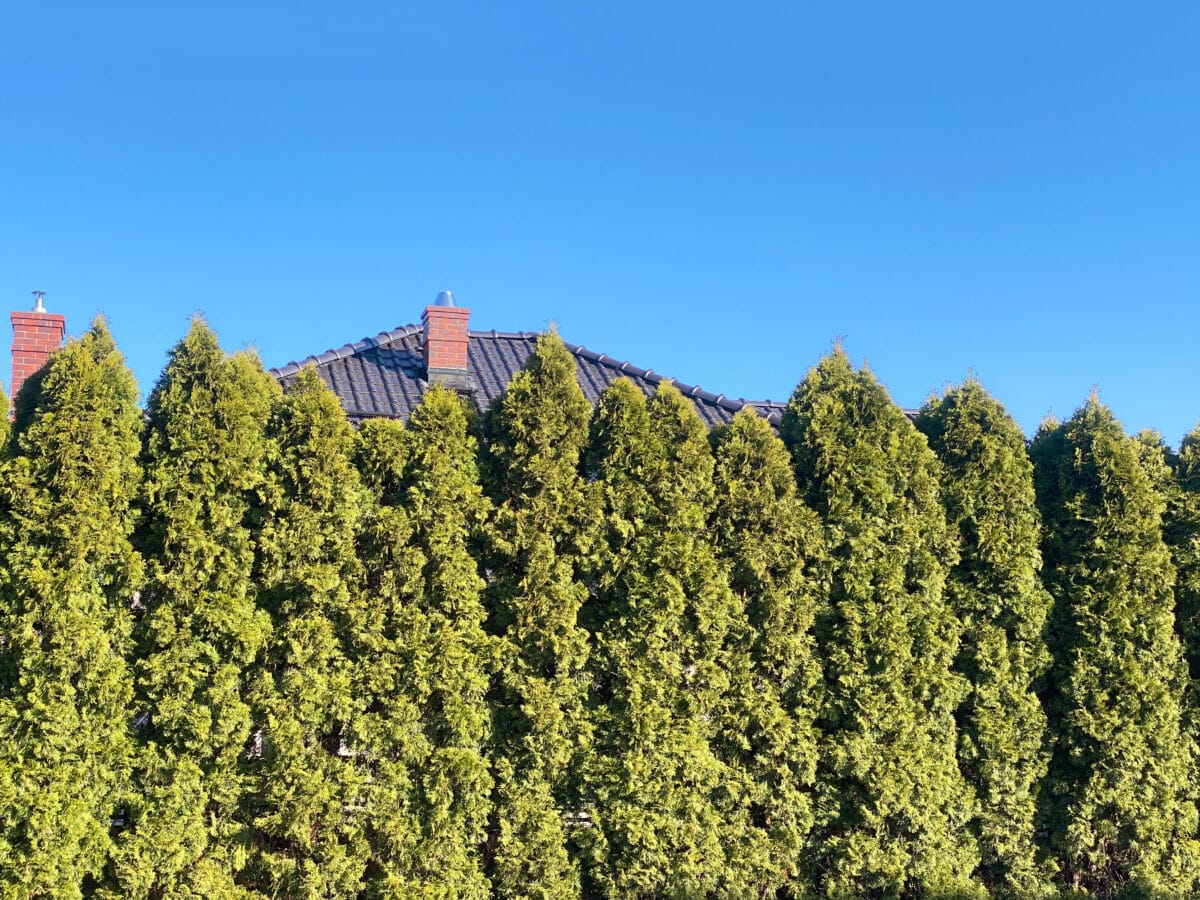
Arborvitae hedges usually don’t die from neglect. They die from kindness: a little sprinkle every evening that keeps the top inch wet and the roots shallow. A soaker hose breaks that pattern, and a hedge watered deeply once or twice a week outgrows a coddled one every time.
Here’s how to set it up and how much water these trees actually want.
How arborvitae roots work
Arborvitae are shallow-rooted evergreens. Most of the feeder roots sit in the top 12 to 18 inches of soil and spread out well past the canopy. Two consequences:
- They dry out fast in wind and heat, even when the tree looks tough.
- They respond best to slow, wide soaking over the whole root zone, not a blast at the trunk.
That’s exactly the delivery pattern of a soaker hose: low, slow, and spread along a line.
Setting up the hose
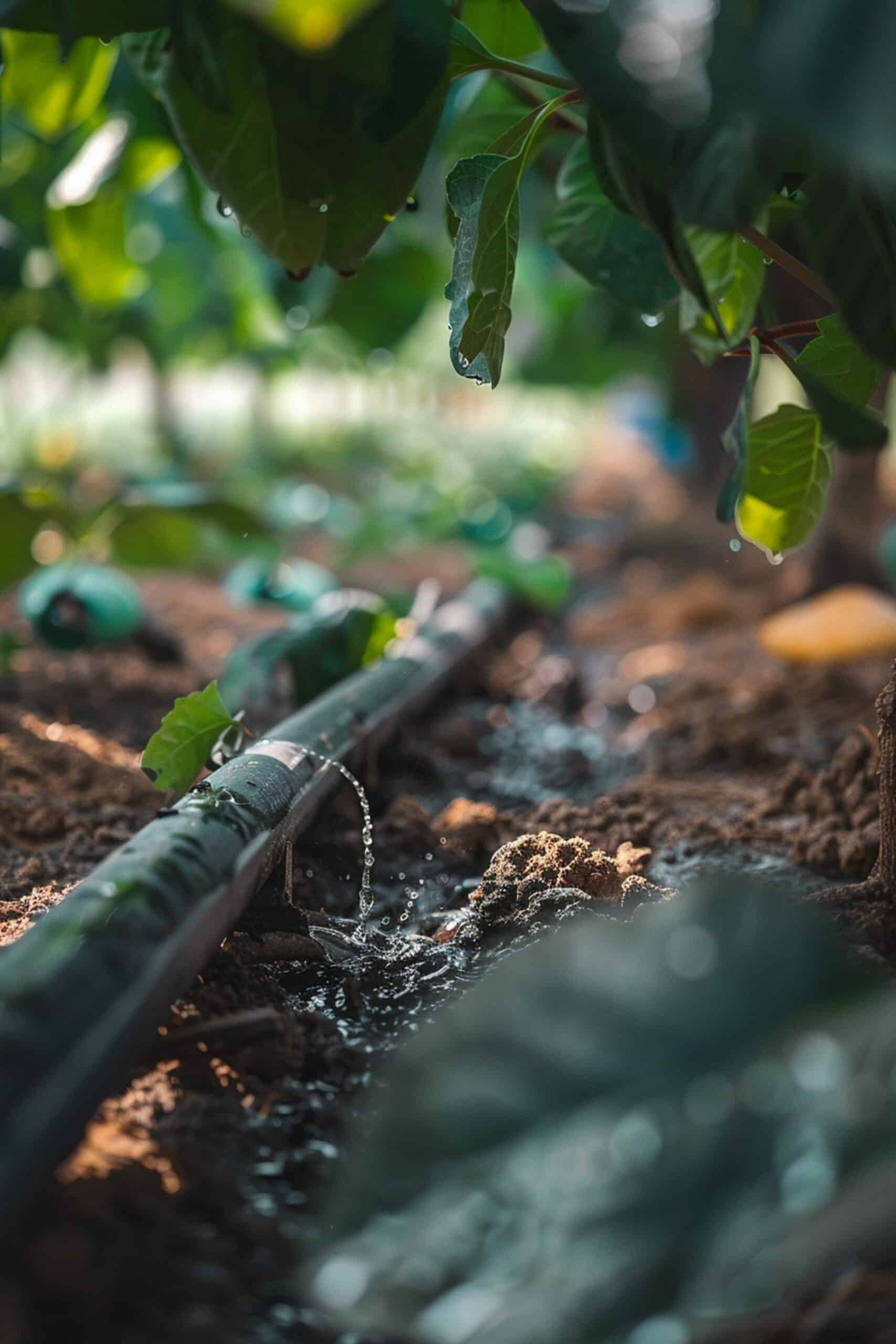
For a hedge row, run one 50 or 75-foot soaker hose down the length of the row, about 12 to 18 inches out from the trunks. For individual specimen trees, coil the hose in a spiral from near the trunk out to the drip line (the edge of the branches), spacing the loops about a foot apart.
Three rules:
- Keep it off the trunk. A hose pressed against bark keeps the crown damp and invites rot. A few inches of clearance is enough.
- Cover it with mulch. Two to three inches of arborist chips or shredded bark over the hose and root zone. Mulch alone cuts water needs by a quarter or more, and it hides the hose.
- Watch the pressure. Soaker hoses want 10 to 25 PSI. Hooked straight to a strong spigot they burst or spray. A cheap regulator fixes that; details in soaker hose pressure regulator.
How much water, and how often
This depends on age. New plantings and established hedges live in different worlds.
First two seasons after planting: the root ball is still small and dries fast. Run the soaker hose 45 to 60 minutes twice a week in spring and fall, and up to three times a week in summer heat. The goal is moisture 8 to 12 inches down, where new roots are spreading.
Established trees (3+ years): deep soak once a week in dry weather, roughly 60 to 90 minutes, and nothing at all in weeks with decent rain. Established arborvitae are reasonably drought-tolerant, but “reasonably” does a lot of work in that sentence during August.
The finger test beats any schedule: push a finger or trowel 3 to 4 inches into the soil near the drip line. Dry and dusty at that depth means water. Cool and damp means wait.
Reading the tree
- Interior needles browning in fall: normal seasonal shed. Don’t touch the hose.
- Tips browning in summer, whole branches thinning: usually drought stress. Water deeply, then check again in a week.
- Yellowing from the bottom up, soggy soil: overwatering or poor drainage. Back off and let it dry.
- One side browning: often wind or winter burn rather than water. A soaker hose helps recovery but won’t reverse dead tissue.
Mistakes that kill arborvitae
Daily sprinkles. Shallow watering trains roots to stay at the surface, where heat kills them first. Deep and infrequent wins.
Watering the foliage in the evening. Wet needles overnight encourage fungal blights, and arborvitae get several. Keep water at the soil.
Forgetting winter. In cold climates, evergreens lose moisture through their needles all winter while frozen ground refuses to replace it. Give the hedge one last deep soaking before the ground freezes. It’s the single best thing you can do for winter burn prevention.
Piling mulch against the trunk. Volcano mulching rots bark. Keep a donut of bare space around each trunk.
FAQ
How many gallons of water does an arborvitae need per week?
A common extension guideline is about 10 gallons per inch of trunk diameter per week in the growing season, delivered in one or two deep sessions. A soaker hose emitting roughly 1 gallon per foot per hour makes the math easy: a 25-foot loop around a tree for an hour delivers around 25 gallons.
Should I water arborvitae in winter?
Only during dry thaws when the ground isn’t frozen, and only if the fall was dry. Otherwise, the deep pre-freeze soak is the job.
Soaker hose or drip emitters for a long hedge?
For hedges under about 100 feet, a soaker hose is cheaper and simpler. Past that, or on slopes, drip line with pressure-compensating emitters waters more evenly. I compared the two approaches in soaker hose vs drip irrigation.
My arborvitae is browning. Will more water fix it?
Only if drought is the cause. Browning from bagworms, spider mites, salt damage, or root rot won’t improve with water, and root rot gets worse. Diagnose first; the soggy-soil test above is the fastest check.
Get the deep-watering rhythm right in the first two years and an arborvitae hedge mostly takes care of itself afterward. For timing the rest of the garden, see how long to run drip irrigation, and for other plant-by-plant guides, browse By Plant & Space. Watering bigger trees? Soaker hose for trees covers the deep-soak method.
1 comment
Comments are closed.