

Search this site for drip irrigation on almost anything else and the answer is close to always yes. For lawns, it’s genuinely more complicated, and I’d rather say that upfront than sell you on a system that fights your grass all summer.
Why lawns are a different problem than beds
Drip is built around point-source watering: deliver water exactly where one plant’s roots are. A lawn doesn’t have discrete plants. It’s a continuous mat of turfgrass roots across an open area, which is precisely the situation sprinklers were designed to solve. Space point-source emitters far enough apart to be practical and you get dry strips between them, unless the spacing is tight enough that you’re basically rebuilding a sprinkler at a fraction of the coverage speed.
Where lawn drip does work
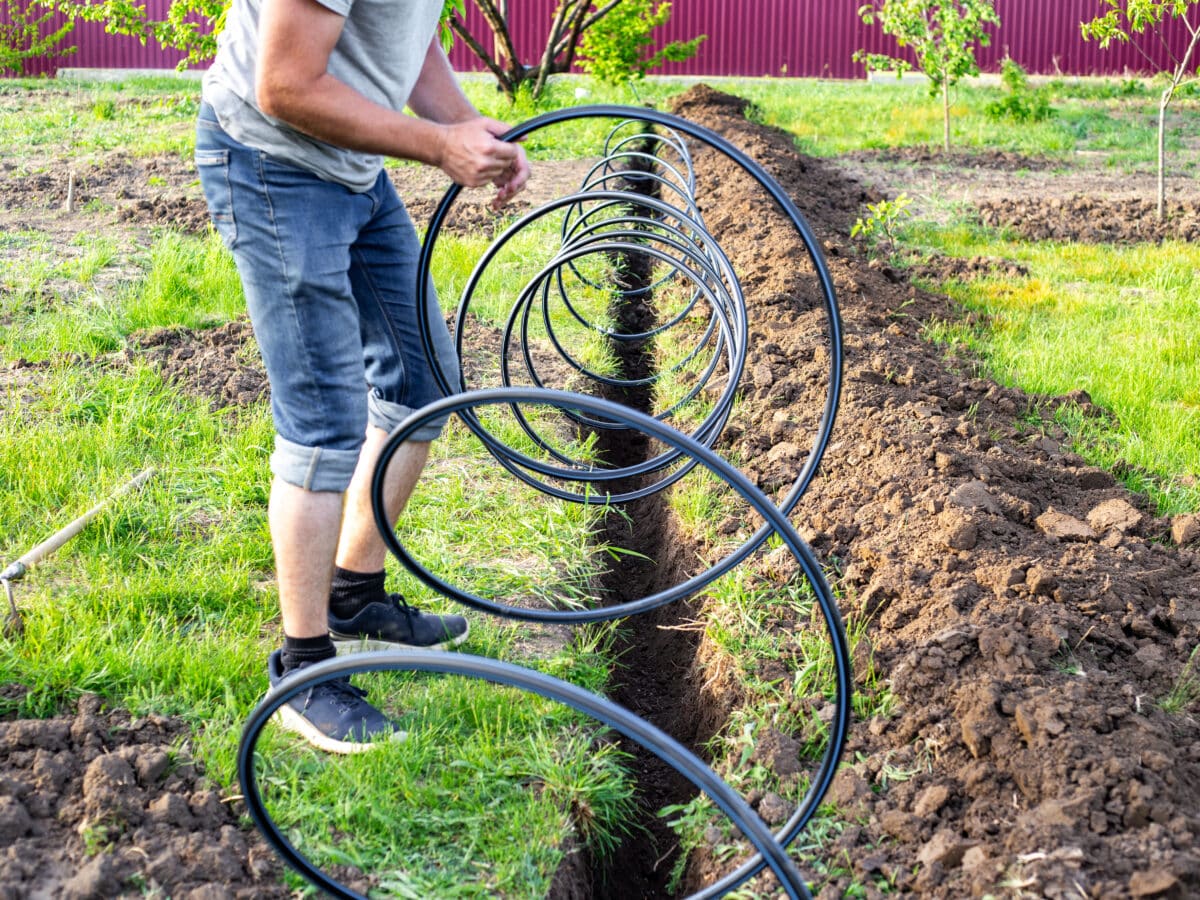
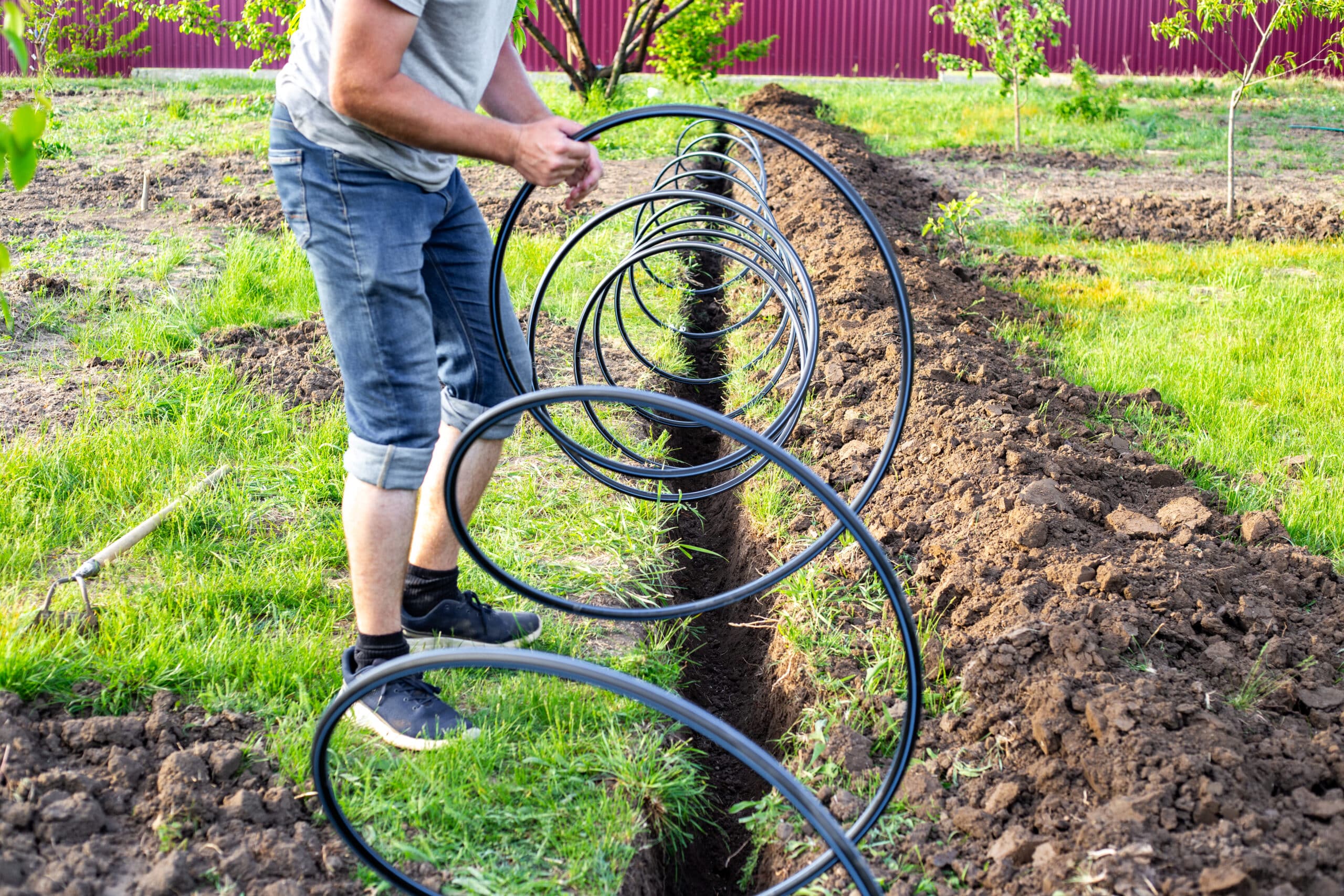
- Subsurface drip irrigation (SDI): tubing buried 4 to 6 inches below the turf, purpose-built for lawns and common in water-restricted regions and on golf courses or sports fields. It’s a different, more specialized product than the surface drip kits covered elsewhere on this site.
- Narrow strips, like a lawn strip between a sidewalk and driveway too narrow for a sprinkler head’s spray pattern to cover without overspray onto pavement.
- Steep slopes, where sprinkler water runs off before it can soak in. Slow drip application actually gets water into the soil instead of down the storm drain.
- Small ornamental lawns under roughly 200 square feet, where the cost of laying drip dense enough to avoid dry patches starts to compete with just running a hose-end sprinkler for twenty minutes.
Subsurface drip for lawns: pros and cons
If you’re weighing SDI seriously, here’s the ledger as I see it. The good column is real. So is the other one.
| Pros | Cons |
|---|---|
| Almost no evaporation or overspray. The water goes straight to the root zone. | Expensive and messy to retrofit into an existing lawn, since every row needs a trench or a vibratory plow. |
| The surface stays dry, so you can water at noon and mow or play on it right after. | You can’t see it working. Problems show up as brown stripes a couple of weeks later. |
| No heads to break with the mower, adjust, or trip over. | Roots grow toward emitters, which is why many lawn SDI products include a root inhibitor. |
| Handles narrow strips, odd shapes and slopes that sprinklers soak the pavement on. | New seed and sod establish slowly from below; plan on a hose or sprinkler for the first few weeks. |
Gophers deserve a line of their own. If you have them, they will find buried tubing, and a chewed line under turf is a miserable repair.
Where sprinklers still win
For a typical suburban lawn of a few thousand square feet, sprinklers cover ground faster, more evenly, and for less money per square foot than drip laid dense enough to avoid dry patches. Unless you’re specifically fighting runoff, water restrictions, or an oddly shaped strip, a well-tuned sprinkler system is still the standard answer for turf. If the question is really about the whole yard rather than just the lawn, soaker hose vs drip irrigation and drip irrigation systems: the complete guide cover the broader tradeoffs.
What subsurface drip costs for a lawn
Contractor prices swing too much by region to quote one number honestly, but the materials math is easy to run yourself. At 12-inch row spacing you need roughly 1,000 feet of dripline per 1,000 square feet of lawn; at 18 inches, closer to 670 feet. With 1/2-inch dripline often selling for somewhere around 20 to 40 cents a foot in bulk rolls, that’s about 0 to 0 of tubing per 1,000 square feet before you add the supply and flush headers, a filter, a regulator, flush valves and a zone valve.
Labor is the part that decides whether SDI makes sense. Trenching dozens of parallel rows into an established lawn takes days by hand or a rented plow, which is why SDI is far easier to justify when the lawn is being put in from scratch. A sprinkler zone covering the same area needs a few heads and much less pipe, so it’s usually cheaper up front. SDI earns the difference back through lower water use, and only over several seasons.
If you’re doing it anyway: the basics
- SDI tubing at 12 to 18 inch row spacing, buried below the mowing and aeration zone so a core aerator won’t hit it.
- A flush valve at the low end of each zone. Buried lines can’t be walked and inspected the way surface drip can, so the flush valve is how you clear sediment.
- Higher filtration than surface drip needs, since a clogged buried emitter is far more work to find and fix than one you can see.
Laying new turf is a different job: fresh sod needs frequent watering at first, as laid out in our day-by-day schedule for new sod.
Frequently asked questions
Will drip irrigation save water on a lawn?
Yes, if it’s SDI done properly, since none of the water evaporates before reaching the roots. The installation cost is higher than a sprinkler retrofit, though, and the payback in water savings can take years to catch up.
Can I mix drip for beds and sprinklers for the lawn on the same system?
Yes, that’s a common setup. Just keep them on separate zones, since beds and turf run at different pressures and schedules.
Does subsurface drip work with any grass type?
It works with most, but grass that spreads by surface runners establishes faster with the more even coverage sprinklers provide. Check with a local extension office for guidance specific to your turf type.
Can I lay drip tubing on top of the grass instead of burying it?
Not in any way you’ll be happy with. The mower catches it, the grass grows over it and turns it into a trip hazard, and on the surface it still waters in stripes. For a narrow strip where you just need something temporary, a soaker hose is the easier fix; using a soaker hose on a lawn covers how to lay it and where it stops working.
Can I still aerate a lawn with subsurface drip under it?
Usually, yes. A typical core aerator pulls plugs 2 to 3 inches deep, so tubing buried at 4 to 6 inches clears it, but check the depth setting on the machine you rent. Skip deep-tine aerators and slicers, and flag the header lines at the edges of the lawn before anyone starts.
For actual plants rather than turf, drip is the easy yes. See drip irrigation for tomatoes and drip irrigation for strawberries for two examples of how straightforward it gets once you’re watering a discrete plant instead of a lawn.