

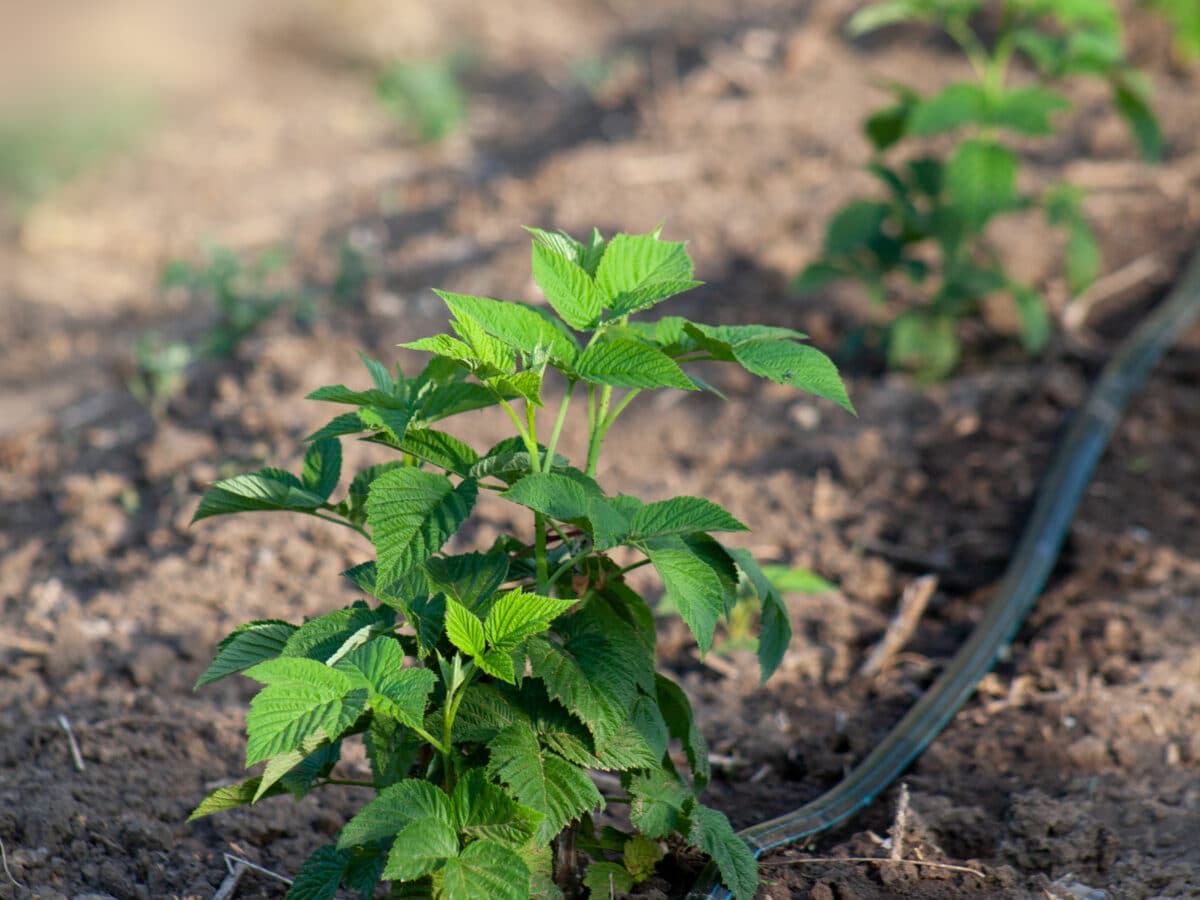
Drip tape looks nothing like the rigid black poly tubing most drip systems use. It’s thin-walled, flat when empty, round once pressurized, and built for one thing: watering rows of the same crop cheaply, for one season, then getting replaced.
Drip tape vs. drip tubing
| Drip tape | Drip tubing | |
|---|---|---|
| Wall thickness | 6 to 15 mil, thin | Rigid poly, much thicker |
| Typical lifespan | One growing season | 5 to 10+ years |
| Shape | Flat when empty, round pressurized | Round and rigid at all times |
| Best for | Row crops, annual vegetable beds | Permanent beds, shrubs, mixed plantings |
| Cost | Cheaper per foot | More per foot, lasts far longer |
For the rigid tubing side of that comparison, including the actual size measurements, see drip irrigation tubing sizes. For how tape and tubing fit into the rest of a system, drip irrigation components and parts explained is the hub.
Emitter spacing options
Tape comes with emitters built in at fixed spacing along its length, usually 4, 8, or 12 inches apart, and the right choice depends on plant spacing: 4 inches for dense plantings like carrots or greens, 8 inches for medium-spaced crops, and 12 inches for widely spaced plants like tomatoes or peppers grown in a row.
How to lay and connect it
- Unroll it in full sun for 15 to 20 minutes if it’s stiff from cold storage. Warm tape uncoils instead of fighting you.
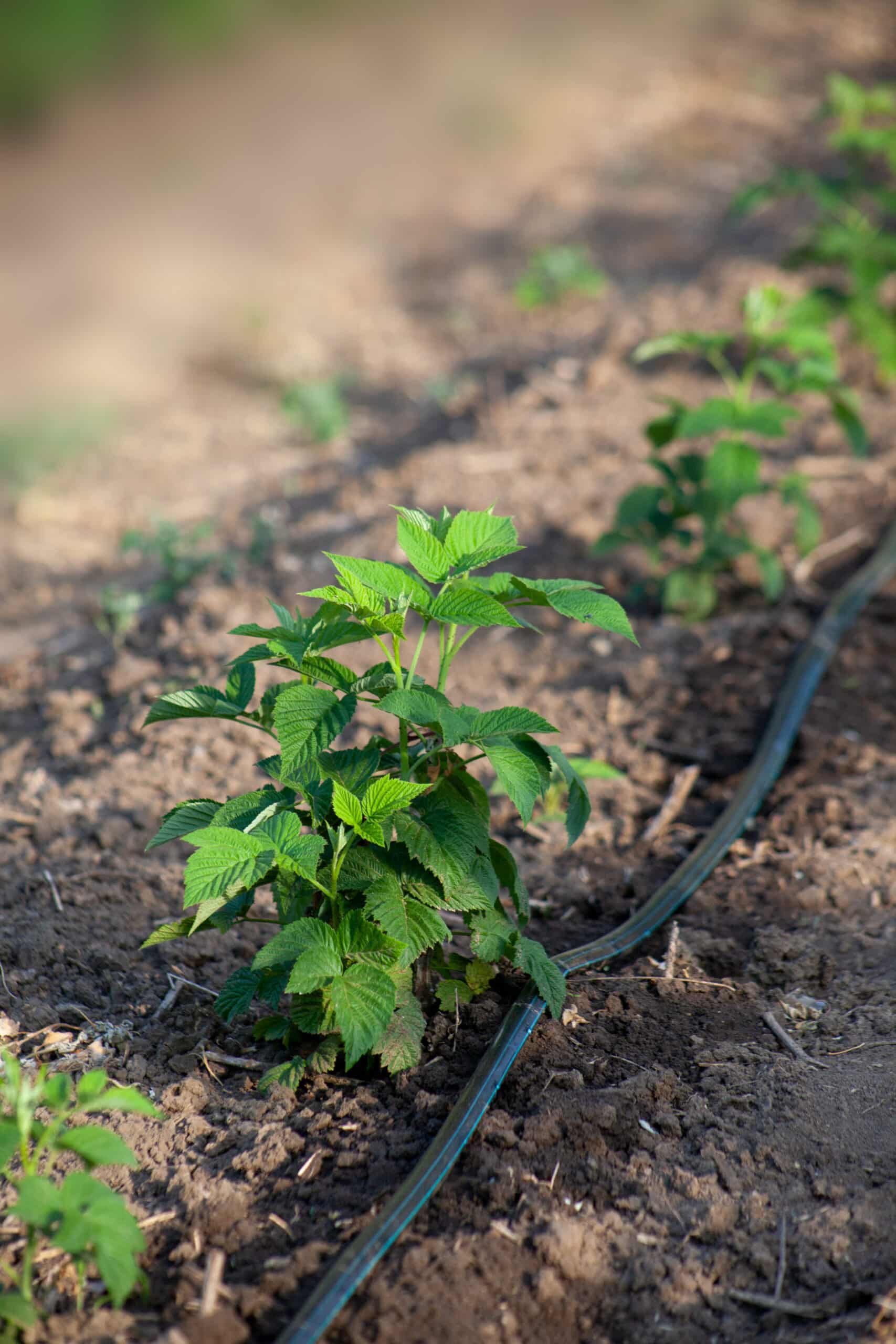
- Lay it flat along the row with the emitters facing up, so they drip onto the soil rather than into the tape itself.
- Connect to the mainline with a tape-specific fitting, not a standard barb. A regular fitting made for rigid tubing can pierce tape’s thin wall.
- Fold the far end over on itself and clamp or tie it off rather than using a rigid end cap, which won’t seal well against tape’s flatter profile.
- Stake it down every few feet. Tape is lighter than rigid tubing and wind moves it more than you’d expect.
Lifespan and when to skip it
Tape is disposable by design. Expect one growing season, maybe two if you’re careful and store it out of UV over winter, though most people don’t bother since new tape each spring is cheap enough that storage isn’t worth the hassle. For anything permanent, perennial beds, shrubs, trees, regular drip tubing is the better buy since it survives years instead of a single season. See drip irrigation tubing sizes for the rigid alternative.
Frequently asked questions
Can you patch a tear in drip tape?
Yes, with a tape-specific coupling made for its thinner wall. A run that needs a third patch in a season is telling you it’s done. Replace it rather than keep patching.
Does drip tape work with a normal drip timer?
Yes. It runs at the same pressure and flow requirements as regular drip tubing and needs the same pressure regulator upstream.
Is drip tape the same as a soaker hose?
No, they work differently. Tape has discrete emitters spaced along its length, while a soaker hose weeps water through a porous wall along its entire run. Soaker hose vs drip irrigation covers how the two compare.
Once tape or tubing is sorted out, the rest of the parts list, filters, regulators, fittings, is covered in drip irrigation components and parts explained.