
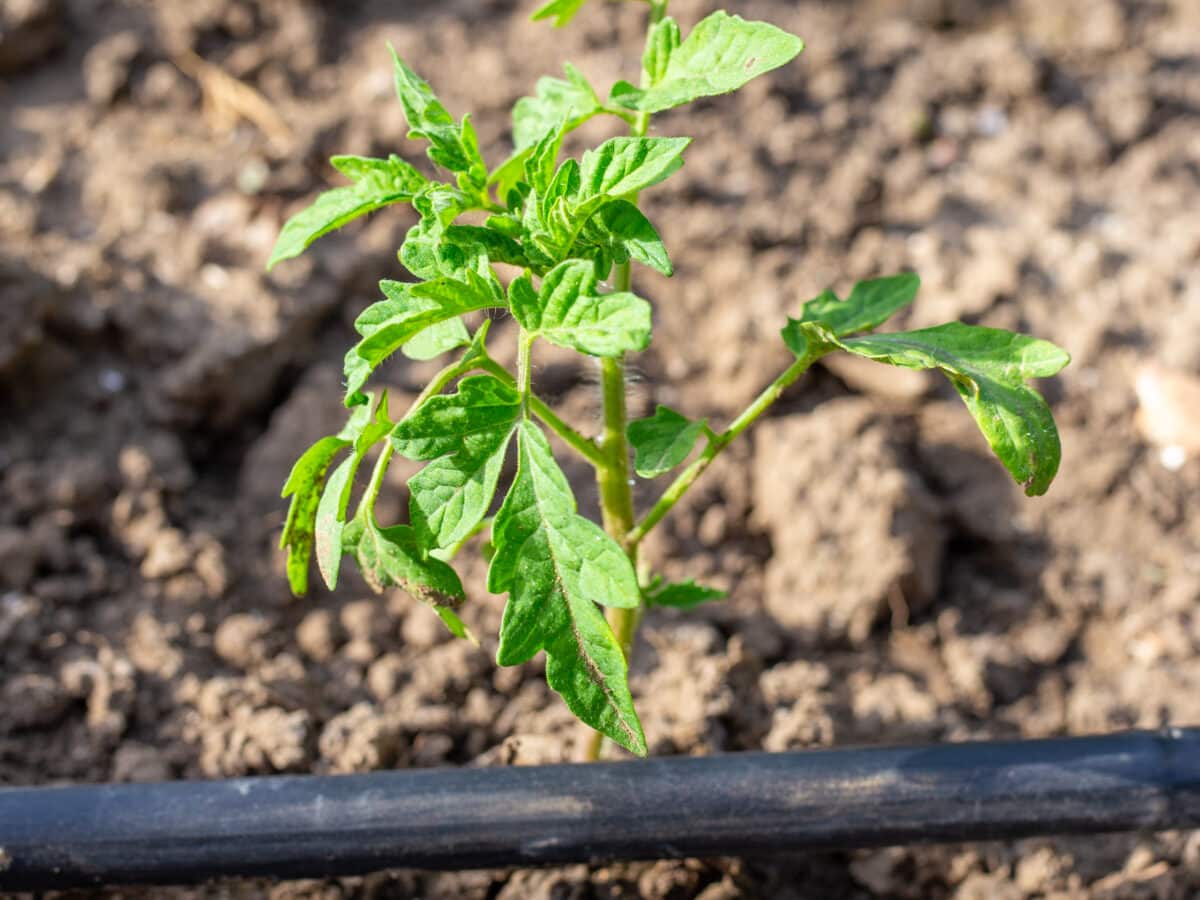
Tomatoes are the plant that makes inconsistent watering visible. Water them erratically and you get blossom end rot, split skins after a heavy rain following a dry spell, and blight creeping up from wet foliage. Drip irrigation fixes the mechanism behind all three: it waters the soil instead of the leaves, on a schedule instead of whenever you remember.
Why tomatoes specifically need consistent water
- Blossom end rot usually isn’t a calcium deficiency in the soil. It’s calcium that can’t move into the fruit because watering has been erratic, so consistent moisture fixes more cases than a calcium spray does.
- Splitting happens when fruit expands faster than the skin can stretch, typically after a heavy watering follows a dry stretch. Even soil moisture prevents the swing.
- Early blight and other fungal problems track wet foliage. Drip keeps water off the leaves entirely, which neither a sprinkler nor a hose can promise.
Emitter spacing and flow rate for tomatoes
| Setup | Spacing or flow | Notes |
|---|---|---|
| Single staked plant | One 1-2 GPH emitter at the base | Move it 6-8in outward as roots spread through the season |
| Row, 24-36in spacing | Dripline with emitters every 12in, or individual emitters per plant | Dripline is faster to lay for 4 or more plants |
| Container or grow bag | One 1-2 GPH emitter, centered | Containers dry faster, expect more frequent, shorter runs |
How much and how often
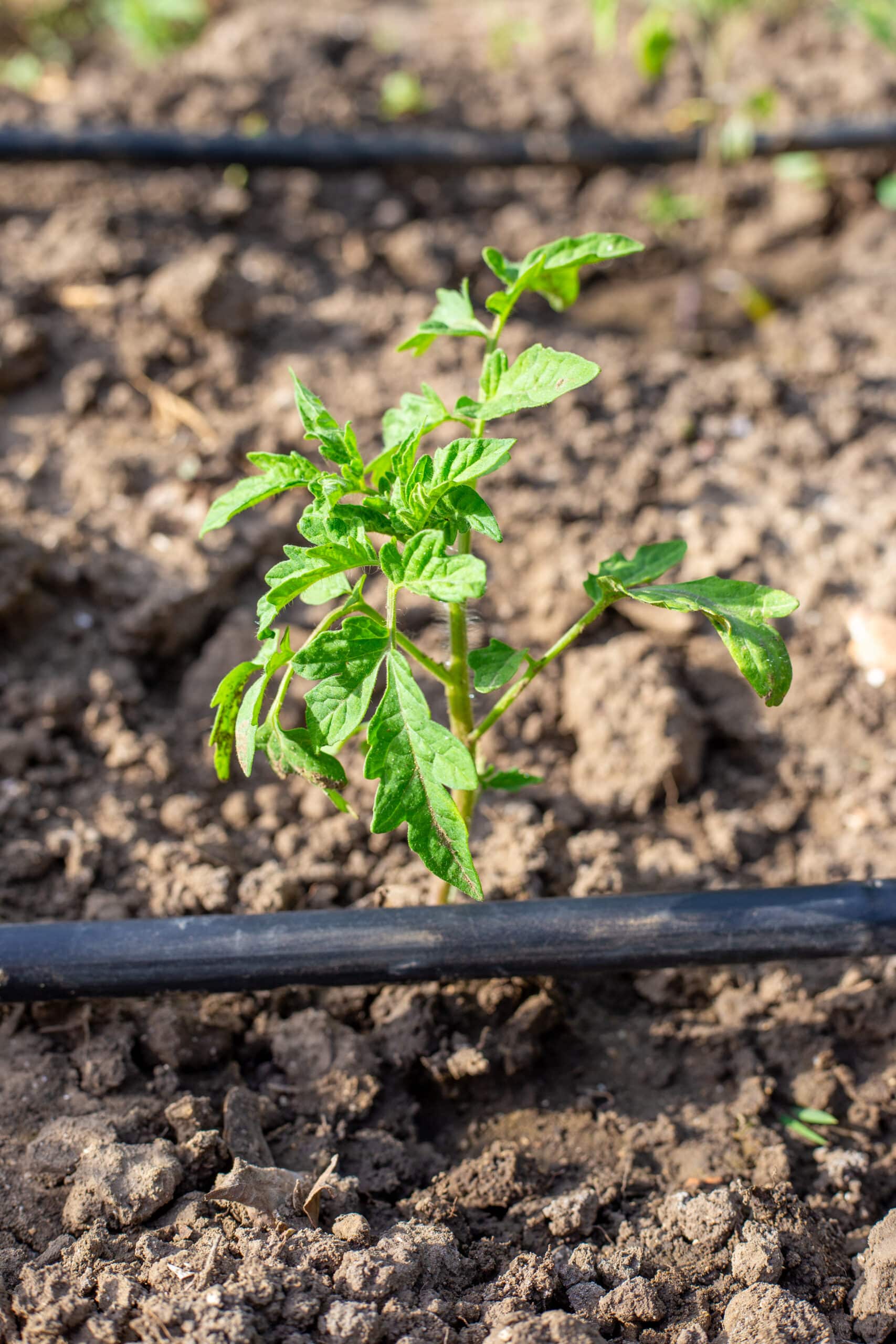
Seedlings and fresh transplants need frequent, light watering while roots establish, short daily runs for the first week or two. After that, switch to deeper, less frequent watering: roughly 1 to 2 inches a week total, split across 2 to 3 runs, adjusted for heat and soil type. The full charts and a simple dig test to check your specific soil are in how long to run drip irrigation.
Containers and raised beds
Raised beds drain well and dry out faster than in-ground rows, and containers dry out faster still, so both need shorter, more frequent runs than the same tomato planted in the ground. Drip irrigation for raised beds covers the full setup if that’s where yours are going.
Common mistakes with tomatoes
- Still hand-watering the leaves out of habit after installing drip. Moving a hose around defeats the point. Let the system do the whole job.
- One emitter per plant on a rangy indeterminate variety that’s spread a wide root system by midsummer. Add a second emitter partway through the season.
- Mulch piled against the stem, trapping moisture at the crown. Leave a couple of inches of bare soil right around the stem itself.
Frequently asked questions
Does drip irrigation actually stop blossom end rot?
It helps a lot, but it isn’t a guarantee. Consistent watering addresses the most common cause, but the soil also needs enough calcium to begin with, so a soil test is worth doing if the problem persists after switching to drip.
Should I mulch on top of drip lines for tomatoes?
Yes. Straw or shredded leaf mulch on top of the tubing holds moisture in, keeps soil from splashing onto the lower leaves, and doesn’t interfere with the emitters underneath.
Can I water tomatoes with a soaker hose instead?
Yes, it’s a reasonable alternative, especially for a single row. Soaker hose vs drip irrigation covers the tradeoffs if you’re deciding between the two.
For the rest of the vegetable garden, not just tomatoes, drip irrigation for garden plants is the hub guide covering emitter sizing and schedules plant by plant.