

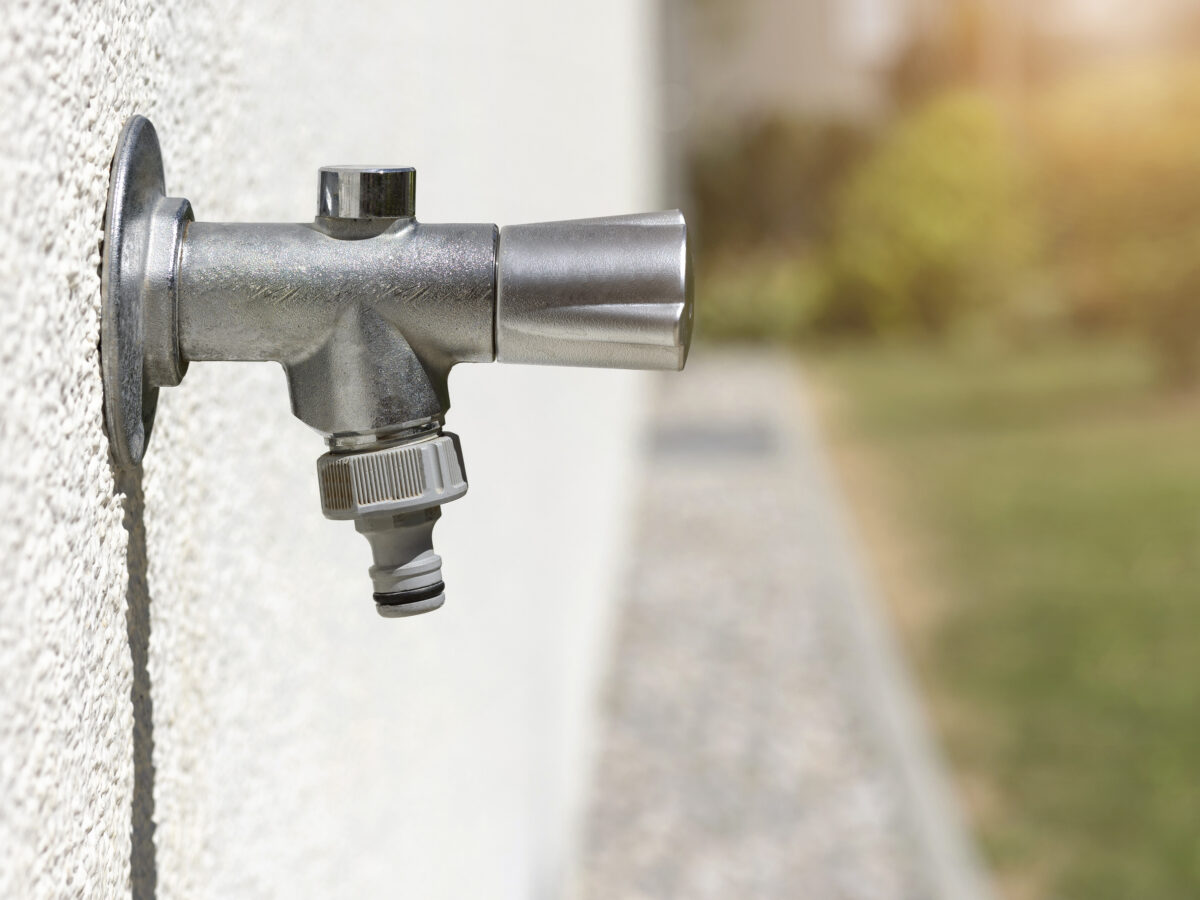
A backflow preventer is the one part of a drip system that has nothing to do with watering your plants and everything to do with keeping your drinking water safe. Skip it, and a pressure drop somewhere on the street can pull fertilizer-tainted water, or worse, right back into the pipe that feeds your kitchen sink. Here’s what it actually does, whether your setup needs one, which type to buy, and how to install it.
What a backflow preventer actually does
Under normal conditions, water only flows one direction: out of the spigot, through the drip line, into the soil. Backflow is what happens when that direction reverses, usually because pressure in the main supply line drops suddenly, say from a water main break, a fire hydrant in use nearby, or a neighbor’s pump kicking on. When that happens, anything sitting in your hose or drip tubing, standing water, dissolved fertilizer from an inline injector, dirt, can get siphoned backward into the supply line.
That’s not a hypothetical, it’s called backsiphonage, and it’s the reason plumbing codes in most US jurisdictions require some form of backflow protection anywhere a hose or irrigation line connects to a potable water source. I’ve seen homeowners skip this part because it doesn’t water anything, and honestly, that’s exactly the kind of part that gets skipped until an inspector or a plumber asks where it is.
Do you actually need one?
For almost every residential drip setup connected to a garden spigot: yes. A few things push it from “good idea” to “required”:
- Local plumbing code. Many municipalities require backflow prevention on any irrigation connection, hose bib timers included. Check your local code before you skip this step, since some areas require an inspected, testable assembly rather than a simple hose-bib device.
- A fertilizer or pesticide injector anywhere in the line. This is the highest-risk case. Even a small hose-end feeder counts.
- A well as your water source rather than municipal supply. The risk shifts from “contaminating the city main” to “contaminating your own well,” which arguably matters more to you personally.
The one case where it’s genuinely optional: a gravity-fed rain barrel system with no connection back to a pressurized potable line. No pressurized main to siphon into means no backflow risk in the plumbing-code sense. Everyone on a standard spigot connection should assume they need one.
Types of backflow preventers
For home drip irrigation, you’ll run into three levels of protection. Which one you need depends mostly on whether a chemical injector is involved and what your local code specifies.
| Type | Protection level | Best for |
|---|---|---|
| Hose bib vacuum breaker | Basic, atmospheric | Simple drip or soaker hose setups, no injected chemicals, screws directly onto the spigot |
| Atmospheric vacuum breaker (AVB) | Moderate, backsiphonage only | Standard drip zones without continuous pressure on the device |
| Pressure vacuum breaker (PVB) | Higher, works under continuous pressure | Systems with a timer that keeps the line pressurized, common multi-zone home setups |
| Reduced pressure zone (RPZ) assembly | Highest, backflow and back-pressure | Any system with a fertilizer or chemical injector; often required by code in that case |
For a basic hose-fed drip zone with no injector, a hose bib vacuum breaker, the cheapest option by far, usually covers it. Once a timer holds constant pressure on the line, a PVB is the more appropriate step up. If there’s an injector anywhere in the system, don’t shortcut this: get the RPZ, or verify with your local code office what’s actually required.
Where it goes in the assembly
Order at the spigot matters, and it’s easy to get backwards if you’re building the whole head assembly at once:
- Timer (if you have one)
- Backflow preventer
- Filter
- Pressure regulator
- Tubing adapter, then the mainline
The backflow preventer sits as close to the water source as practical, before the filter and before the pressure regulator. That placement protects the entire downstream assembly, and it’s the position code inspectors expect to see if your area requires a visible, testable device.
How to install one
- Turn off the water at the spigot before touching anything.
- Thread the backflow preventer directly onto the spigot, hand-tight, then a quarter turn with pliers if it’s a threaded hose-bib style. Most residential units need no tools, no soldering, no cut pipe.
- Check the flow-direction arrow. Nearly every backflow device has one molded into the housing. Installed backwards, it either blocks flow entirely or, worse, provides no protection while looking installed correctly.
- Attach the timer, if any, ahead of the backflow preventer, not after it. Timers with plastic internals aren’t rated as backflow protection themselves, so the dedicated device still needs to sit between the timer and the rest of the assembly on most hose-bib setups. If you’re not certain of your specific timer’s rating, keep the preventer as close to the spigot as the hardware allows.
- Continue the assembly downstream: filter, then regulator, then mainline. The full parts rundown is in drip irrigation components and parts explained if you’re building the whole head from scratch.
- Test it. Turn the water on, check for leaks at every threaded joint, and confirm water flows only forward through the system.
For a PVB or RPZ assembly plumbed into a dedicated irrigation line rather than a simple hose bib, installation usually involves cut pipe and may need to pass inspection depending on your municipality. That’s a reasonable point to bring in a licensed irrigation contractor rather than DIY it, since a failed inspection means redoing the work anyway.
Signs of a failing backflow preventer
- Constant dripping or spraying from the device itself, especially from a small vent hole on a PVB or RPZ. A little weeping during operation is normal on some models; continuous dripping when the system is off usually isn’t.
- Visible cracking in the plastic housing, common after a hard freeze if the device wasn’t drained for winter.
- A sudden change in water taste or clarity near the spigot, which warrants shutting the system down and checking the device immediately rather than waiting.
Cheap hose-bib vacuum breakers are a $5 to $15 part, and I’d rather replace one at the first sign of trouble than fuss with trying to repair it. For a PVB or RPZ, a cracked housing or a valve that won’t seat means calling in a professional, since these assemblies are also often subject to annual testing requirements in areas that mandate them.
Common mistakes
Assuming a pressure regulator does the same job
It doesn’t. A pressure regulator controls how hard water pushes through the system going forward. A backflow preventer stops water from moving backward at all. Both belong in the assembly, and neither substitutes for the other.
Installing it after the filter or regulator
This defeats the point. If contaminated water can get past the filter and regulator before hitting the backflow device, those parts, and everything between the spigot and the device, are exposed to backsiphonage first. Keep it first in line.
Forgetting it exists once it’s installed
Unlike an emitter or a section of tubing, a backflow preventer rarely announces a slow failure. Give it a quick visual check each season, the same time you’re checking the filter and regulator, rather than assuming a part with no moving symptoms is fine forever.
FAQ
Is a backflow preventer legally required for drip irrigation?
In most US jurisdictions, some form of backflow protection is required anywhere an irrigation system connects to potable water, though the exact device required varies by local code. Check with your municipal water department or a local irrigation supplier before assuming a basic hose-bib model satisfies your area’s rules, especially if a chemical injector is involved.
Can I use the same backflow preventer for multiple zones?
Generally yes, if it’s installed upstream of the point where the line splits into zones, since it protects everything downstream of its position. Some local codes still require a device at each individual zone valve, particularly for chemical injection points, so this is worth confirming locally.
Does a soaker hose need a backflow preventer too?
Yes, the same backsiphonage risk applies to any hose or tubing connected to a spigot, soaker hose included. A basic hose-bib vacuum breaker is typically enough for a plain soaker hose setup with no chemical feed.
How long do backflow preventers last?
A basic hose-bib vacuum breaker often lasts 3 to 5 years before the internal seal degrades, less in freezing climates if it isn’t drained for winter. PVB and RPZ assemblies are built to last longer but typically need annual testing where code requires it, which also catches wear before it becomes a real failure.
It’s a small, inexpensive part that does one unglamorous job, and it’s the reason a pressure drop on your street doesn’t turn your drip system into a path back into the water supply. Once it’s in place, move on to the rest of the head assembly: the filter and pressure regulator that go right after it, or the complete walkthrough in DIY drip irrigation system if you’re building from scratch.