

The timer is what turns a pile of tubing into an irrigation system. Programming it well takes ten minutes, and programming it badly wastes water all season or quietly kills plants while you’re on vacation. Here’s how to set it up right.
Where the timer goes
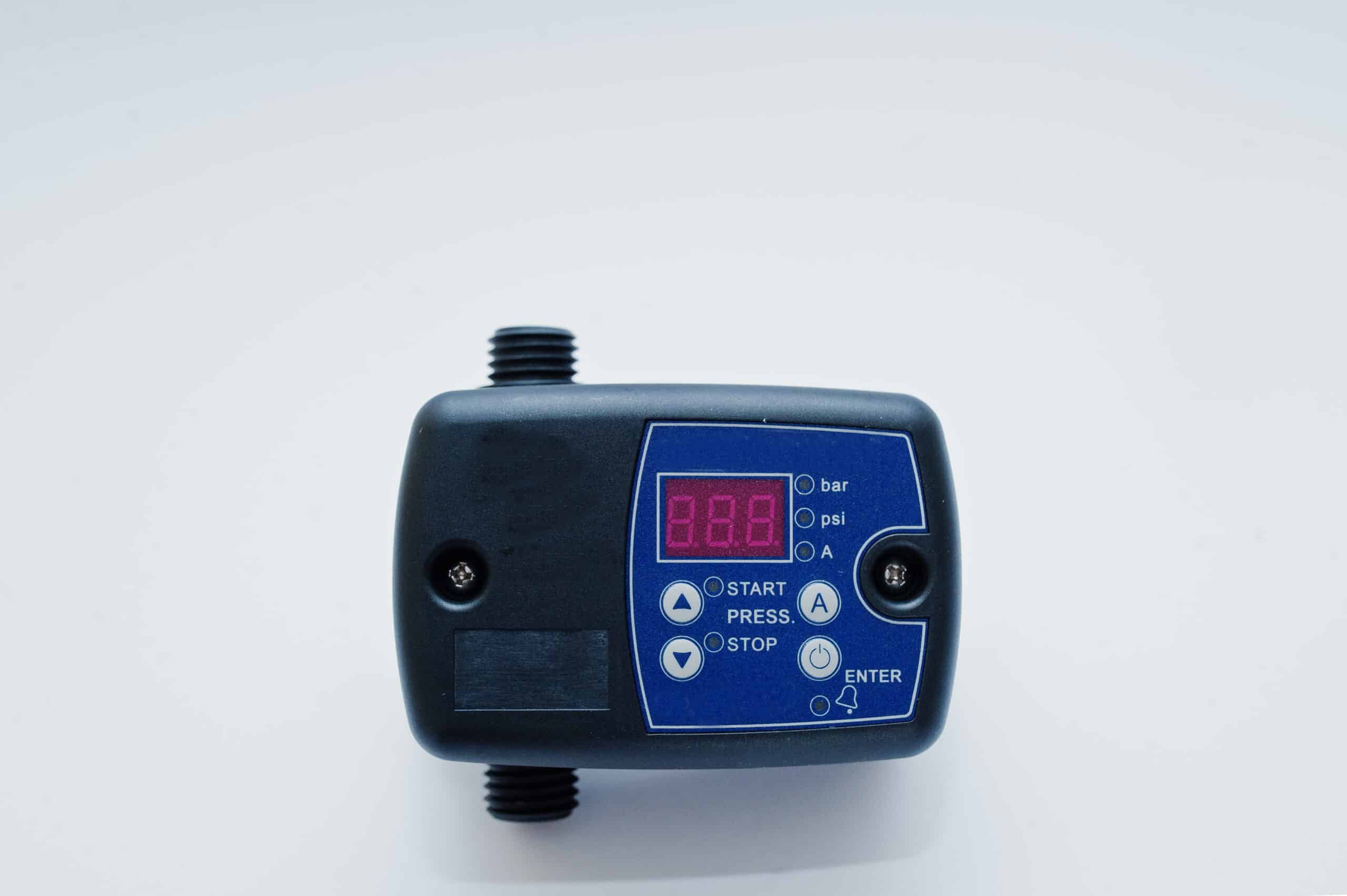
The timer screws directly onto the spigot, first in line, before everything else: timer, backflow preventer, filter, pressure regulator, then the tubing adapter. It’s the only component rated for full supply pressure, and it has to control the whole chain downstream.
Two physical details that matter: hang the assembly so the timer’s weight isn’t levering sideways on the hose bib, and hand-tighten only. Plastic threads, remember.
The three settings that matter
Every hose-end timer, dumb or smart, comes down to three numbers:
- Start time. Early morning, 5 to 7 AM. Evaporation is lowest, wind is calmest, and any water that splashes onto foliage dries before fungal spores clock in for the day.
- Run time (duration). How long each session lasts. This is where most people guess wrong, usually too short.
- Frequency. How often sessions repeat: daily, every 2 days, specific weekdays.
Everything else, smart features, apps, seasonal-adjust percentages, is a refinement of these three.
Programming by what’s planted
These starting points assume 1 GPH emitters, one or two per plant, on loamy soil. Adjust after a week of the dig test (soil like a wrung sponge, 4 inches down, an hour after watering):
| Planting | Run time | Frequency |
|---|---|---|
| Vegetable beds (dripline) | 45-60 min | Every 1-2 days |
| Raised beds | 45-60 min | Every 1-2 days |
| Shrubs and perennials | 60-90 min | Every 3-4 days |
| New trees | 90-120 min | Twice a week |
| Containers | 15-30 min | Daily in summer |
Sandy soil shortens sessions and raises frequency; clay does the opposite. The reasoning and the adjustment method are in how long to run drip irrigation.
Adjusting through the season
A set-and-forget program is a spring program running in August. Two habits fix that:
- Monthly check-in. Dig the test hole, look at the plants, nudge duration up or down 15 minutes as needed. Summer peak usually wants 25 to 50 percent more than spring.
- Rain delay after storms. Most timers have a one-button delay of 24 to 72 hours. Use it. Watering soaked soil is pure waste and invites root rot.
Smart timers with weather-based adjustment automate this and mostly earn their premium for it. Not essential, genuinely convenient.
The failure modes to prevent
Dead batteries. The classic. A timer with dead batteries fails closed: no water, no warning, and by the time the plants flag it, they’ve been dry for days. Replace batteries every spring without being asked, and pick a model with a low-battery indicator.
Overly clever programs. Four short cycles a day keeps the root zone shallow and the system cycling wear. One session per zone per watering day is right for almost everything; containers are the exception.
Forgetting the manual button exists. New plants, heat waves, and system tests all want water now. The manual run handles all three without touching the program.
Timer and regulator: the order question
A question that comes up constantly: does the regulator go before or after the timer? After. Always after. The timer handles full pressure, the regulator doesn’t reliably, and the warranty says so. Full assembly order with photos is in pressure regulator for drip irrigation.
Winter
Before the first hard freeze: remove the timer, open any drain it has, shake the water out, bring it inside. Water expands nine percent when it freezes, and the valve housing loses that argument every time. The full seasonal routine is in winterizing your drip irrigation system.
FAQ
Can one timer run two different schedules?
A single-outlet timer can’t; everything waters together. Dual-outlet timers run two independent programs from one spigot, which is the right answer when beds and shrubs share a tap.
How often should drip irrigation run in summer?
It depends on plants and soil more than the calendar, but a typical summer pattern is every 1 to 2 days for vegetables, daily for containers, every 3 to 4 days for established shrubs, twice weekly for young trees.
Is a smart timer worth it for drip?
If the price gap is small, yes, for the weather-based rain skipping alone. If it doubles the cost, a basic digital timer plus your own attention does nearly the same job. The feature priorities are the same as for soaker hoses; see best soaker hose timer.
Why does my timer say it’s running but nothing comes out?
Check in order: spigot actually open, batteries fresh, filter not clogged, and the timer’s own screen not cracked from a freeze. Nine times out of ten it’s batteries or a clogged filter.
Set the morning start, give roots a real drink rather than a sip, and walk the dig test once a week for the first month. After that, the system runs itself. More component guides live in Components & Parts.