

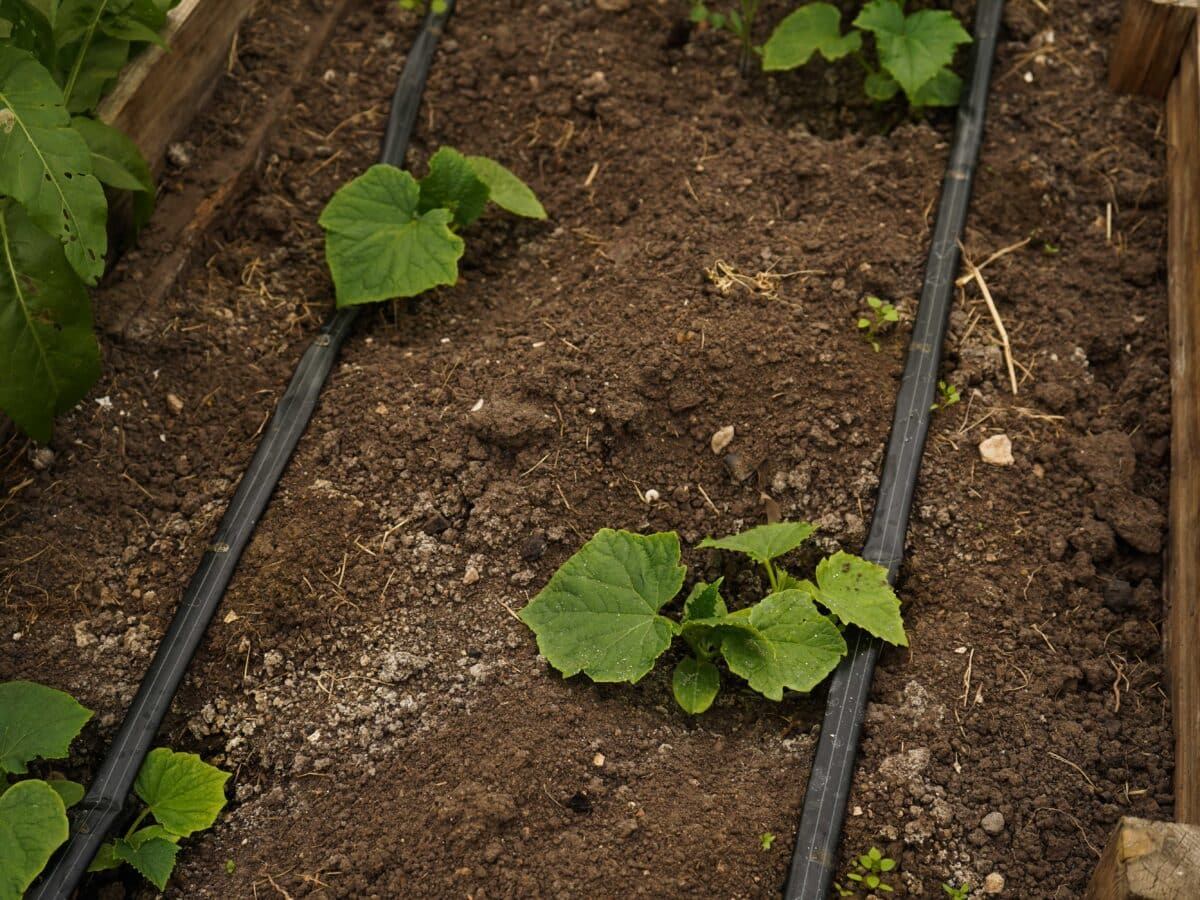
Raised beds are where I actually recommend a soaker hose over drip tubing most often. The area is small, the shape is fixed, and there’s no fence line or gravel path to route around. But a soaker hose that works great in a long perennial border can flood one corner of a 4×4 bed and leave the opposite corner dry, because the layout rules for a boxed-in bed are different from a straight row. Here’s how I lay them out so the whole bed gets even water, not just the loop closest to the spigot.
Why raised beds behave differently than in-ground rows
Two things make raised beds their own category. First, the soil mix. Most raised beds are filled with a blend of compost, topsoil, and something coarse like perlite or pine bark, which drains faster than native ground soil. That mix holds less water per inch of depth, so a bed that looks bone dry after two days in July is normal, not a sign anything’s wrong.
Second, the shape. A raised bed is short and wide instead of long and thin, so a single straight run of hose down the middle leaves both edges dry. You need loops or parallel rows, and in a bed under about 4 feet wide, that means the hose is doing a lot of turning in a tight space.
How much hose your bed actually needs
I get this question more than almost any other: how many feet of soaker hose for a bed this size. The honest answer depends on how tightly you space the rows, but here’s what I use as a starting point for a serpentine layout with rows about 12 to 15 inches apart.
| Bed size | Square footage | Hose needed (serpentine) | Rows |
|---|---|---|---|
| 4 x 4 ft | 16 sq ft | 14-16 ft | 3 rows |
| 3 x 6 ft | 18 sq ft | 16-18 ft | 3 rows |
| 4 x 8 ft | 32 sq ft | 26-30 ft | 5-6 rows |
| 2 x 8 ft | 16 sq ft | 16-18 ft | 2 rows |
Buy a little more than the table says. Coiling the hose into tight U-turns at the end of each row eats up a foot or two more than a straight measurement suggests, and you want enough slack left over to reposition things once the bed is planted and you can actually see where the dry gaps are.
Laying it out, step by step
- Sketch the bed on paper first. Mark where the tall plants (tomatoes, trellised beans) and the shallow-rooted ones (lettuce, radishes) will go. Deep-rooted plants can handle wider loop spacing than shallow greens can.
- Start the layout at the corner nearest your water source. Run a standard, non-porous leader hose from the spigot to the bed edge, then switch over to soaker hose once you’re inside the frame.
- Snake it in a serpentine pattern, keeping rows 12 to 15 inches apart for most vegetables, closer to 8 to 10 inches for shallow-rooted greens that dry out fast.
- Pin it down. Landscape staples work, but in a raised bed I usually just bury the hose an inch under the soil surface before planting, which holds it in place without any extra hardware.
- Cap the far end, or loop it back toward the entry point if you’re planning to feed a second bed in series.
Running two or more beds off one spigot
If you’ve got a row of raised beds along a fence line, you don’t need a separate spigot connection for each one. Run a Y-connector or a length of solid leader hose out to a splitter, then feed each bed its own soaker hose from there. Keep each bed’s individual run under about 25 feet; raised bed runs are usually short enough that pressure loss isn’t the limiting factor, tight corners and kinks are. For the fitting types involved in tying multiple hoses together without losing pressure at the joints, see how to install a soaker hose.
Run time for raised beds
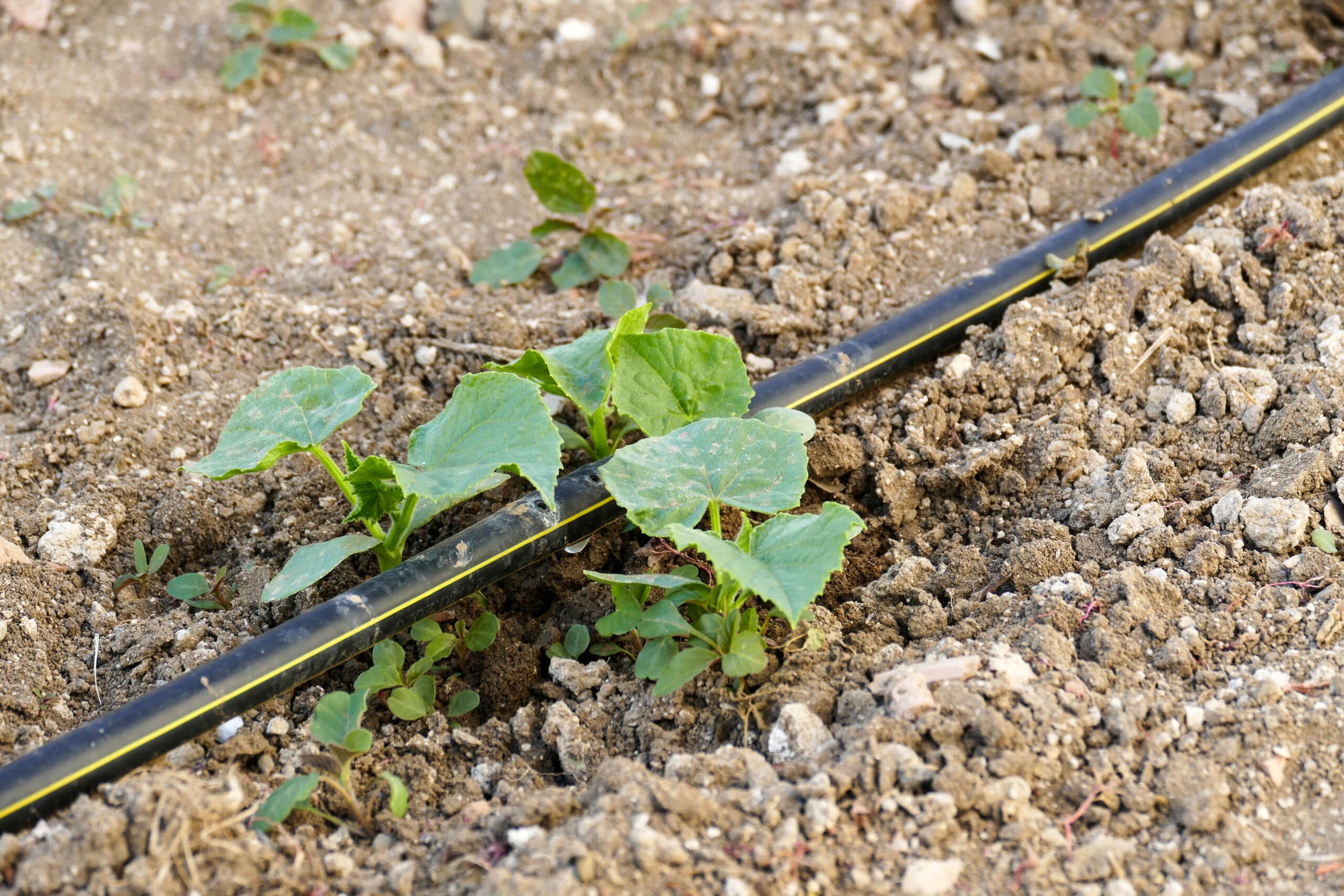
Because the soil mix drains fast, raised beds generally want shorter, more frequent watering than the same soaker hose laid in native ground soil. Where a ground-level vegetable row does fine on 30 to 45 minutes two or three times a week, I run raised beds closer to 20 to 30 minutes every other day during peak summer, then back off to twice a week once nights cool down. The dig test still applies here: check 3 to 4 inches down with a finger an hour after watering. Wrung-out-sponge damp is right; bone dry means bump the time up, not the frequency, since a long soak that actually reaches deep still beats daily shallow watering even in a fast-draining mix.
Mistakes I see most in raised beds specifically
Spacing rows too far apart. A 24-inch gap works fine in loose ground soil where water spreads sideways as it moves down. In a raised bed mix that’s heavier on compost and lighter on clay, water tends to move straight down more than it spreads, so wide row spacing leaves dry strips between the loops.
Running full pressure straight from a hose bib. Same problem as any soaker hose, but it’s worse in a small bed, because a burst seam right next to your seedlings does real damage fast. A cheap in-line pressure regulator is worth it even on a single 4×4 box.
Forgetting the hose is there at harvest time. A garden fork through a buried soaker hose while digging potatoes is one of the more annoying ways to end a growing season. Sketch the layout somewhere you’ll actually remember, or mark the corners with a stake.
Soaker hose or drip tubing for a raised bed?
A soaker hose is the faster, cheaper setup for a single bed or a fairly uniform planting, a salad box, a bed of one crop. Once you’re running several beds with different plants in each one, mixing thirsty tomatoes with drought-tolerant herbs in the same box, individual drip emitters give you more control over how much water lands where. I go through that trade-off in more depth, along with a raised-bed-specific drip layout, in drip irrigation for raised beds.
FAQ
Can I bury a soaker hose in a raised bed?
Yes. An inch under the soil surface is fine, and it’s actually common in raised beds since it’s easy to till fresh compost in each season without disturbing the hose too much. Just sketch the layout somewhere you’ll remember so you don’t slice through it with a garden fork.
How many soaker hoses do I need for a 4×8 raised bed?
One hose run in a serpentine pattern covers a standard 4×8 box. You don’t need multiple separate hoses, just enough length, 26 to 30 feet per the table above, folded into 5 or 6 rows.
Do raised beds need more water than in-ground gardens?
Usually yes, in frequency if not total volume. The faster-draining mix loses moisture quicker, so raised beds often need watering every other day in hot weather where an in-ground bed gets by on two sessions a week.
Should I remove the soaker hose over winter?
If you’re in a freezing climate, pull it out, drain it, and store it indoors. Water trapped in the hose over winter can freeze and split it, and you’ll want the bed clear for turning in compost or mulch before spring planting anyway.
Once the layout is in the ground, the rest is mostly consistency. For the full spigot-to-soil process, including pressure setup and mulch, see how to install a soaker hose, and for the bigger-picture comparison of soaker hoses against drip systems, the complete soaker hose guide covers where each one fits.