

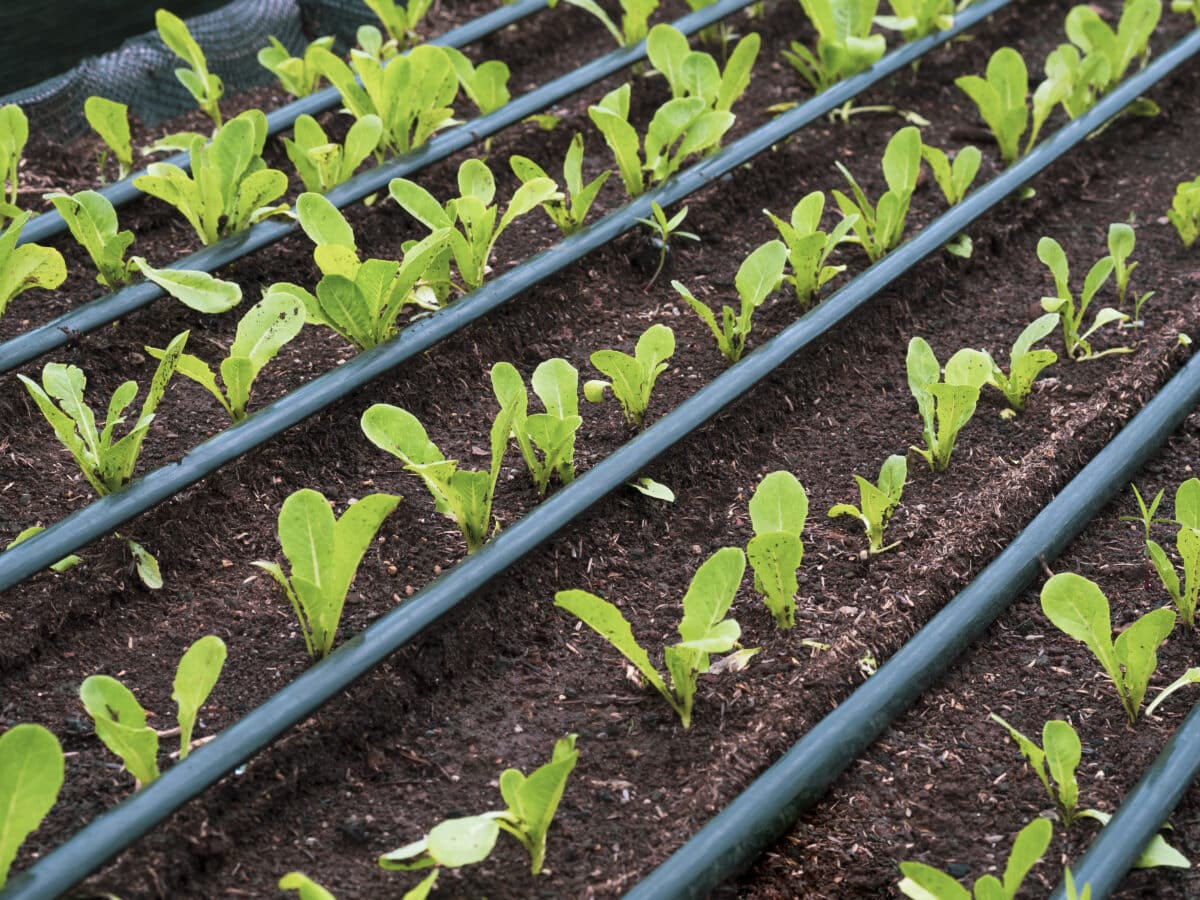
Walk into any garden center and “drip irrigation” gets used as a catch-all for at least five different setups that don’t work the same way. Point-source emitters, inline dripline, drip tape, micro-sprayers, subsurface drip, they all put water near the roots instead of in the air, but the similarities mostly stop there. Picking the wrong one for your layout is how people end up with a system that either starves the far end of a bed or drowns the first few plants in line.
Here’s what each type actually is, where it earns its keep, and how to figure out which one (or which combination) fits your yard.
The main types, at a glance
| Type | Best for | Typical cost | Effort to install |
|---|---|---|---|
| Point-source emitters | Widely spaced plants, containers, shrubs | $0.20-$0.50 per emitter | Low-medium |
| Inline dripline (with built-in emitters) | Rows, dense beds, hedges | $0.15-$0.30 per foot | Low |
| Drip tape | Row crops, annual vegetable beds | $0.05-$0.15 per foot | Low, but seasonal |
| Micro-spray / micro-sprinkler | Groundcover, tight plantings, seed beds | $1-$3 per head | Medium |
| Subsurface drip | Lawns, permanent beds, no-till gardens | $0.20-$0.40 per foot | High (digging required) |
Point-source (individual) emitters
This is the type most people picture first: a length of half-inch mainline tubing with quarter-inch feeder lines branching off to a single button emitter at each plant. Every emitter can be a different flow rate, so a thirsty tomato and a drought-tolerant rosemary three feet away can each get exactly what they need on the same zone.
The tradeoff is labor. Every emitter is a separate punch, a separate feeder tube, and a separate thing that can eventually clog or pop off. I’ve punched holes for a full border of azaleas in an afternoon and it’s not glamorous work. It’s the right call for containers, scattered shrubs, or a mixed border where plants aren’t in tidy rows, less so for a dense bed of identical plants where dripline does the same job with far less punching and poking. The parts involved, filters, regulators, and the emitters themselves, are broken down in drip irrigation components and parts explained.
Inline dripline
Dripline is quarter-inch (sometimes half-inch) tubing with emitters already built in at fixed spacing, commonly every 12 inches. You lay it, stake it every few feet, and you’re done, no individual punching required. For a vegetable row, a raised bed, or a hedge where plants are evenly spaced, this is usually the fastest system to install and the easiest to maintain, since there’s nothing to clog other than the tube itself.
It’s a poor fit for a mixed bed with wildly different plant spacing, since you’re stuck with whatever emitter interval the roll comes in. Most home gardens end up running both types on different zones: dripline for the row crops, individual emitters for the shrubs along the fence.
Drip tape
Drip tape looks similar to dripline but it’s thinner-walled, flatter when empty, and cheaper per foot, built for one growing season rather than a decade of reuse. It’s the standard choice for row-crop vegetable gardens where beds get reworked every year anyway, since replacing it costs almost nothing and you’re not fighting to coil up something that’s already collapsed flat in storage. It’s a weaker choice for permanent plantings like shrubs or perennial beds, where the durability of real dripline pays for itself over a few seasons. The full rundown on when tape wins and when tubing does is in drip tape: what it is and how to use it.
Micro-spray and micro-sprinklers
Instead of dripping water at a point, these small heads spray a fine mist or fan pattern over a foot or two of ground. That makes them useful for groundcover, seed beds that need even surface moisture to germinate, or tightly packed annuals where individual emitters would mean an impractical number of feeder lines. The downside is the one drip irrigation is supposed to avoid: wetting foliage and the soil surface, which means more evaporation loss and, in humid climates, more risk of fungal disease on leaves that stay damp.
Subsurface drip
Subsurface drip buries dripline a few inches under the soil surface instead of laying it on top. Nothing is visible, nothing gets knocked loose by foot traffic or a wandering mower, and evaporation loss drops close to zero since the water never sees open air. It’s the setup professional turf and orchard installers reach for on lawns and permanent beds.
The catch is installation. Burying tubing means trenching, which is a bigger job than laying tubing on the surface and staking it, and it’s much harder to spot and fix a leak or a clog since you can’t just look at the line. A buried emitter that clogs quietly might not show up as a problem until a shrub is already struggling. Reserve subsurface drip for plantings you don’t intend to redig for years, not for an annual vegetable bed you’ll be reworking every spring.
How to choose for your yard
Most yards end up as a mix rather than one type everywhere, and that’s normal, a system doesn’t need to be uniform to work well. A practical way to decide zone by zone:
- Straight rows or a dense, evenly spaced bed: inline dripline (or drip tape if it’s an annual vegetable bed you’ll rework every year).
- Scattered shrubs, containers, or a mixed border: individual point-source emitters, sized per plant.
- Groundcover or a seed bed needing even surface moisture: micro-spray, accepting the higher evaporation tradeoff.
- A lawn or a permanent bed you won’t be redigging: subsurface drip, if you’re willing to trench once and forget it for years.
Whatever mix you land on, the layout still needs proper zoning and mainline planning before you buy anything, that’s covered start to finish in drip irrigation system layout: how to plan zones, mainlines, and emitter spacing. And if you’d rather start from a pre-built kit than piece a system together from parts, the tradeoffs of kit versus custom build are compared in best drip irrigation system: kits compared.
Mistakes worth avoiding
- Using drip tape on a permanent planting. It’s built for a season, not a decade. A shrub bed deserves real dripline or point-source emitters.
- Mixing emitter flow rates on one zone without checking the math. Point-source setups with several different GPH ratings on one mainline can starve the lowest-pressure branch if the total flow runs past what the line can deliver.
- Choosing subsurface drip for a bed you’ll redig soon. Burying tubing you’ll dig up again in six months is wasted effort, use surface dripline instead.
- Ignoring foliage-wetting risk with micro-spray in humid climates. If fungal disease is already a problem in your garden, a point-source or dripline system that keeps leaves dry is usually the safer pick.
FAQ
What’s the difference between drip tape and dripline?
Drip tape is thin-walled and inexpensive, built for one growing season in row crops. Dripline is thicker, more durable tubing meant to last for years in permanent beds, hedges, or landscaping. They install the same way, but tape is disposable and dripline isn’t.
Can I combine different types of drip irrigation on the same system?
Yes, and most home gardens do. It’s common to run dripline on a vegetable row and individual point-source emitters on nearby shrubs, either on the same zone or split into separate zones if their watering schedules differ.
Is subsurface drip worth the extra installation effort for a home garden?
Usually only for a lawn or a planting you don’t plan to rework for years. For an annual vegetable bed, the trenching cost outweighs the benefit, since you’d be redigging around buried tubing every time you replant.
Which type of drip irrigation is cheapest to start with?
Drip tape has the lowest cost per foot, but for a small first project a basic point-source emitter kit is usually the simplest starting point, since it comes with the regulator and filter already sized correctly.
There’s no single “best” type here, only the one that matches how your plants are arranged and how permanent the planting is. Most gardens settle into a mix within the first season or two, and that’s the system working as intended.