

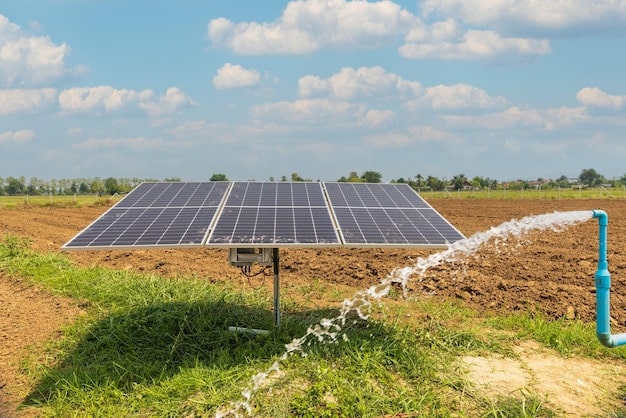
Every few weeks someone asks me a version of the same question: their garden plot doesn’t have power nearby, or the spigot is two hundred feet from the nearest outlet, and they want to know if a solar panel can just run the whole drip system. The honest answer is sometimes, and only if you’re clear on what “solar powered” actually means here, because the phrase covers two very different setups that get lumped together in product listings and search results.
One version just keeps a battery timer topped off so you never swap AAs again. The other actually builds water pressure from a tank or barrel using a small DC pump. Only the second one matters if you don’t have a spigot with real pressure behind it. Here’s how each works, what they can realistically deliver, and where people get burned by the gap between the marketing photo and the actual output.
Two things “solar powered” can mean
A solar trickle charger on a normal timer
If your system already runs off a spigot with normal city pressure, 40 to 60 PSI before the regulator, a “solar” timer is usually just a battery-powered hose timer with a small photovoltaic cell wired into the battery compartment. It doesn’t move water and it doesn’t add pressure. It keeps the AA batteries charged so you’re not climbing out to the garden every spring with a fresh four-pack. Useful, cheap, and not remotely the same product as what’s next.
A solar-powered pump
This is the version people usually mean when they ask whether drip irrigation can work with no grid power at all: a panel charges a battery, the battery runs a 12V DC pump, and the pump pulls water from a rain barrel, IBC tote, pond, or well and pushes it through the drip line at real working pressure. This is the only setup that actually replaces a spigot, and it’s a different project entirely from bolting a solar cell onto an existing hookup.
What a small solar pump can actually deliver
Drip emitters need somewhere around 15 to 25 PSI to perform evenly. Below that, pressure-compensating emitters drip unevenly or barely at all. A small 12V diaphragm pump, the kind sold for RV and marine use and commonly bundled into garden solar kits, typically puts out 1 to 1.5 gallons per minute at 40 to 60 PSI with a full battery behind it. That’s more than enough once it’s stepped down through a standard 25 PSI pressure regulator, the same part every other drip system needs.
The panel size that keeps a pump like that running through a normal watering cycle is smaller than most people expect. A 20 to 30 watt panel paired with a 12V, 7 to 12 amp-hour sealed battery covers a short daily cycle, 15 to 30 minutes, on one zone. Push past that, multiple zones or longer run times, and you’re sizing up to 50 to 100 watts with a real deep-cycle battery, which starts looking less like a garden accessory and more like a small off-grid power project.
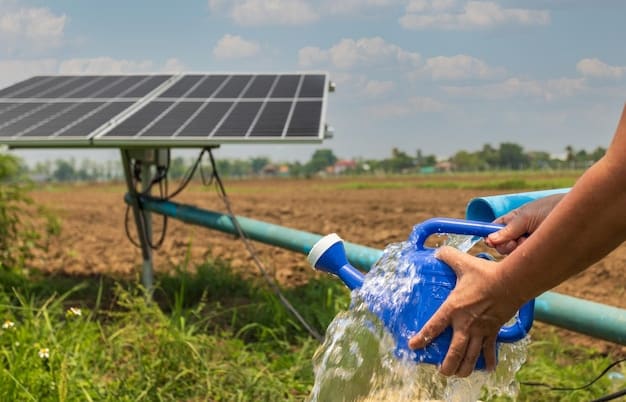
Three real options, compared
| Setup | What it powers | Panel size | Output pressure | Rough cost |
|---|---|---|---|---|
| Solar trickle-charge timer | Keeps an existing battery timer charged; spigot still supplies pressure | 1-2W | N/A, uses city pressure | $25-$45 |
| Small DC solar pump kit | Pulls from a barrel or tote, builds real pressure for one zone | 20-30W | 40-60 PSI (regulate to 25) | $90-$180 |
| Larger solar pump + deep-cycle battery | Multiple zones, longer runtimes | 50-100W | 40-70 PSI | $250-$500+ |
What it can’t do
A small kit won’t reliably run a full multi-zone yard system all season without a battery sized for several cloudy days in a row, and most kits assume at least a few hours of decent sun daily. In the Pacific Northwest in November that assumption falls apart fast. In Arizona in July it barely gets tested. Size the battery for your actual weather pattern, not the one in the product photo taken somewhere sunnier.
Sizing it for your setup
Work it out in gallons, not vibes. A raised bed with eight dripline emitters at 1 GPH each pulls about 8 gallons an hour as a zone; a 30-minute run is 4 gallons. A small 20-30W kit handles that without strain. Scale up to three zones with 15 emitters each at 1 GPH and you’re looking at 45 GPH if they all ran together, which is exactly why you don’t run them together on a small pump. Run zones one after another instead. Combined draw pulls the PSI down at the far end the same way an oversized mainline zone does on a regular spigot system, covered in more detail in the system layout guide.
The water source matters as much as the pump
A solar pump usually draws from a barrel, tote, or well rather than filtered municipal water, so filtering matters more here, not less. Untreated water carries sediment, algae, and tannins that clog the tiny openings in drip emitters faster than tap water ever does. Don’t skip the screen filter just because the rest of the system is scaled down; the filter guide covers mesh sizes and how often to rinse one.
Mistakes worth avoiding
- Undersizing the battery for the site’s actual sun exposure rather than the best-case number on the box. A north-facing plot under a tree line needs a bigger panel than the spec sheet assumes.
- Skipping the pressure regulator because “it’s already low power.” A small pump still spikes PSI as the diaphragm cycles, and emitters clog on dirty rain barrel water just as fast as they do on tap water.
- Running multiple zones off one small pump at once and wondering why the far end barely drips. Same flow math as any undersized mainline, just at a smaller scale.
- Leaving a lead-acid battery outdoors uncovered over winter. Sub-freezing temperatures kill them fast, and a dead battery in April means starting the season a month behind.
FAQ
Can a solar panel run a full drip irrigation system?
A small panel and battery run one zone reliably. Multiple zones or long run times need a properly sized panel, 50 watts or more, and a real deep-cycle battery, at which point it’s less a garden accessory and more a small off-grid power system.
Do I need a battery, or will the panel alone work?
You need a battery. Panels don’t hold steady output as clouds pass or the sun angle shifts through the day, and a pump needs continuous current to hold pressure. The battery is what actually runs the pump; the panel’s only job is keeping the battery charged.
Will a solar drip system work on cloudy days?
For a day or two, yes, if the battery started full. String several overcast days together and a small kit runs out of reserve. Size the battery for your area’s worst realistic stretch of weather, not the average one.
Does a solar pump still need a pressure regulator?
Yes. Emitters and dripline are rated for 15 to 30 PSI whether the pressure comes from a city main or a battery-powered pump. Skip the regulator and you get the same blown fittings and popped emitters as any over-pressured system.
A solar setup is a real option once you understand which of the two products you’re actually buying, and it earns its keep fastest on a single remote bed rather than a whole yard. For the parts list that goes with it regardless of power source, the components and parts guide covers what each fitting does, and the system price breakdown has the numbers for building the rest of it from scratch.